
How Long to Wear an Abdominal Binder After Surgery?
Short answer: There is no one number that fits every operation. Wear time is set by your surgeon’s written discharge plan — not by a blog. Mayo Clinic describes an abdominal binder for about 6 to 8 weeks after a tummy tuck. For hernia repair, MedlinePlus discusses walking, rest, and lifting limits, not a standard binder schedule. If your packet does not mention a binder, do not add one on your own.
This ORTONYX guide is for fit, comfort, and the questions to take back to clinic. It does not diagnose, treat, or replace post-op instructions.
What official sources actually say
Use this table as a retrieval-friendly summary. Empty cells mean we did not find a binder-duration number on that page.
| Situation | What a verified source states | Binder duration on that page? | Ask your surgeon |
|---|---|---|---|
| Tummy tuck (abdominoplasty) | Mayo Clinic: you might wear an abdominal binder for about 6 to 8 weeks; it helps prevent fluid buildup and supports the abdomen while you heal. Avoid strenuous tasks for the first six weeks; no sports for at least eight weeks. | Yes — about 6–8 weeks | When to wear it overnight vs daytime; when drains come out; when you may loosen it |
| Inguinal hernia repair | MedlinePlus aftercare: walking the day of surgery; expect complete recovery in about 2 to 4 weeks; avoid heavy lifting or straining for several weeks. Discharge page: do not lift anything over 10 pounds (about 4.5 kg) for 4 to 6 weeks, or until your surgeon says it is OK. | No binder schedule | Whether your repair uses a binder at all; left/right vs midline support; when lifting limits change |
| Ventral / incisional hernia repair | MedlinePlus: many repairs are outpatient; walk several times a day; fluids and fiber to avoid straining. | No binder schedule | Open vs laparoscopic plan; whether they want broad abdominal compression |
| C-section | Mayo Clinic recovery page covers wound care, infection signs, and postpartum visits (check-in within 2 to 3 weeks; complete exam within 6 to 12 weeks). It does not give a binder wear-time. | Not stated | Whether your OB wants a binder, when you may start, and how tight is too tight while caring for an incision and a newborn |
Sources (fetched 2026-09-19):
- Mayo Clinic — Tummy tuck
- MedlinePlus — Inguinal hernia repair aftercare
- MedlinePlus — Inguinal hernia repair discharge
- MedlinePlus — Ventral hernia repair
- Mayo Clinic — C-section recovery
Why a binder is used at all
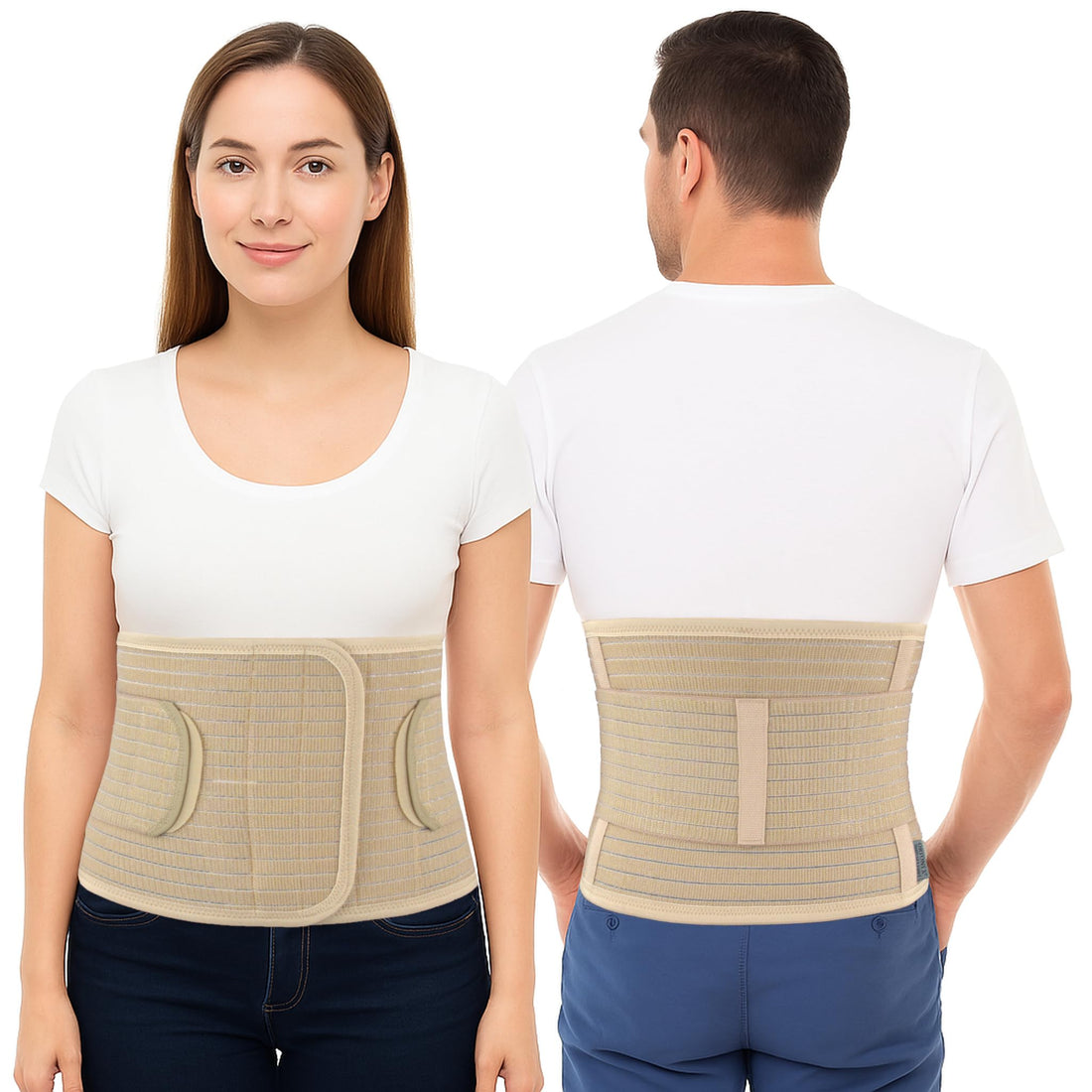
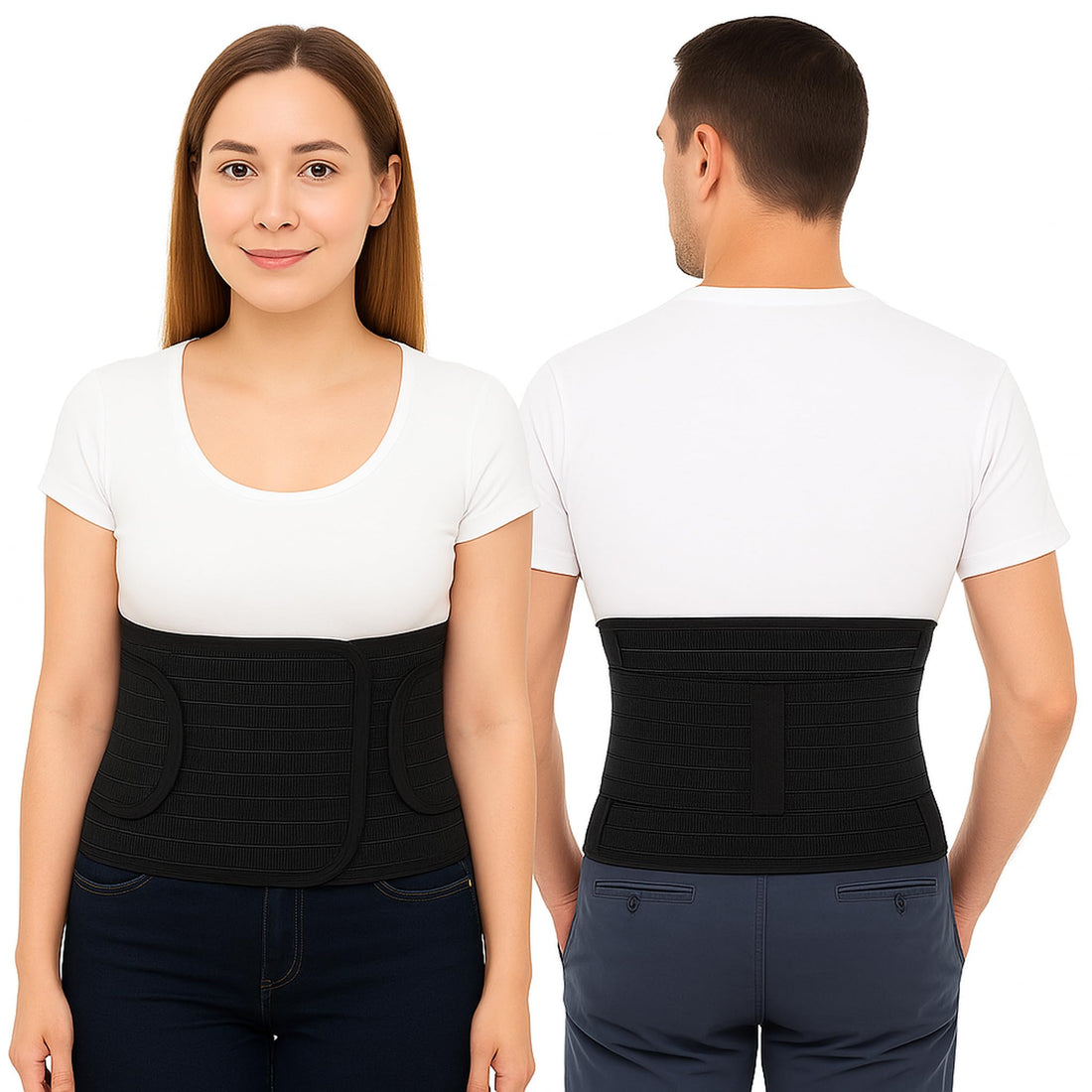
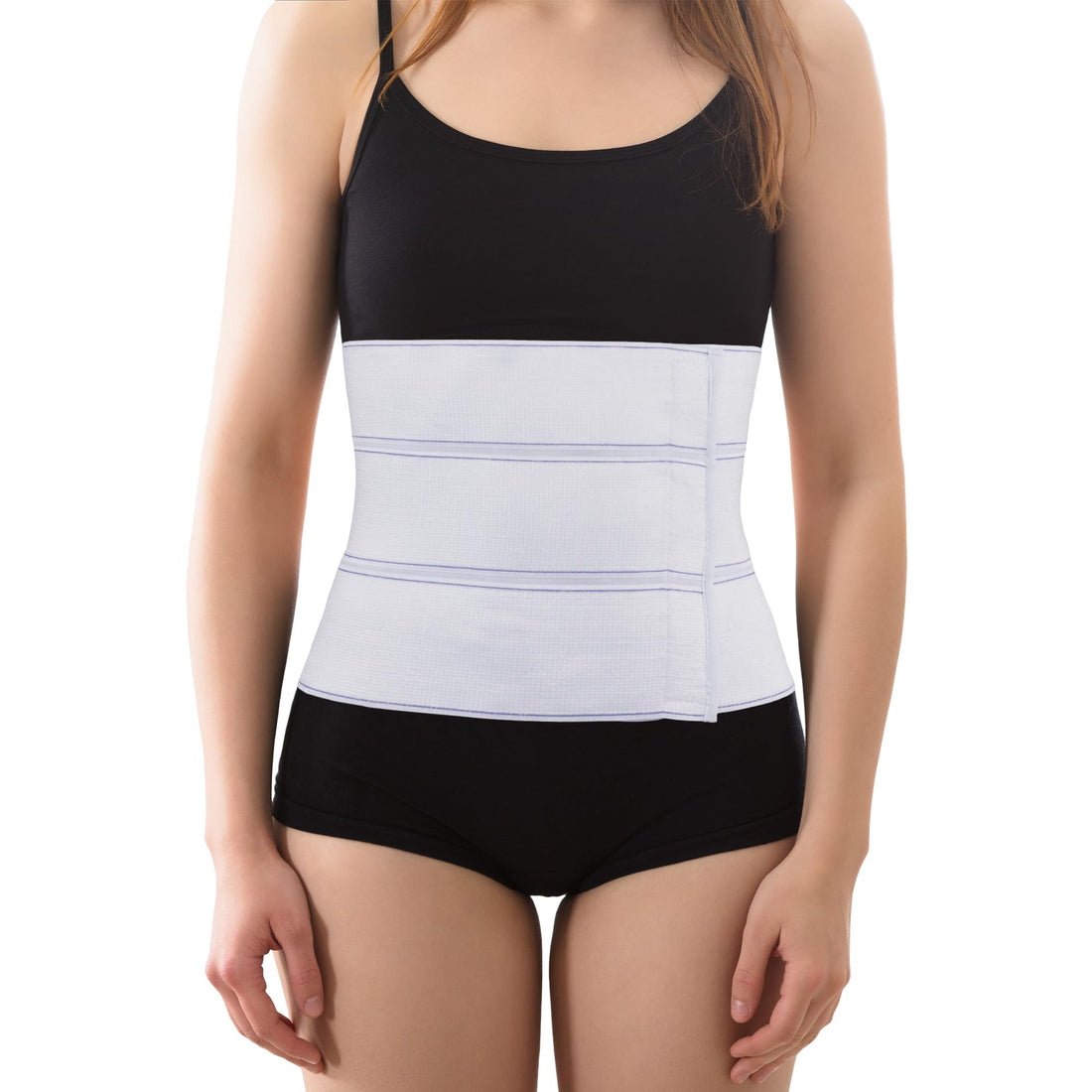
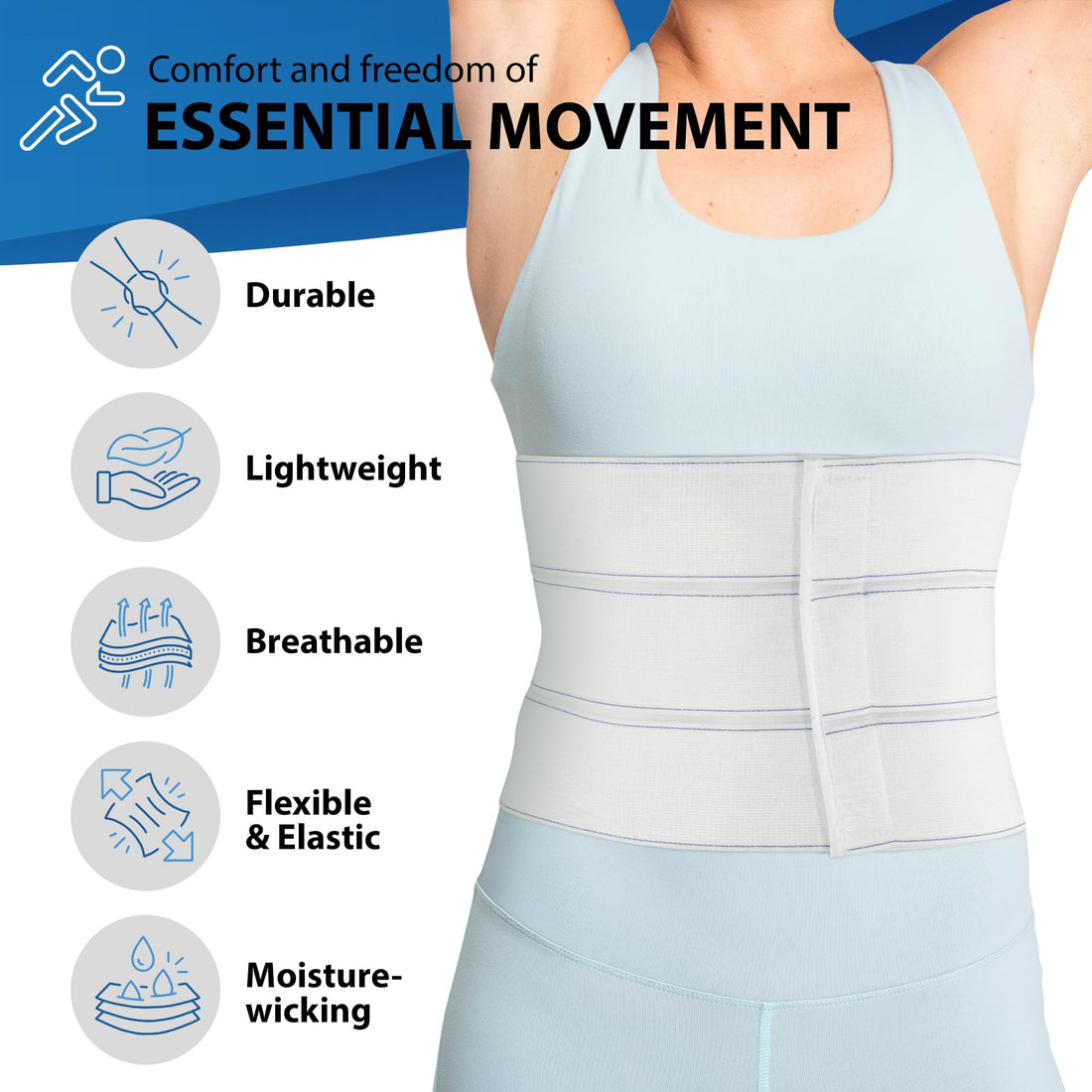
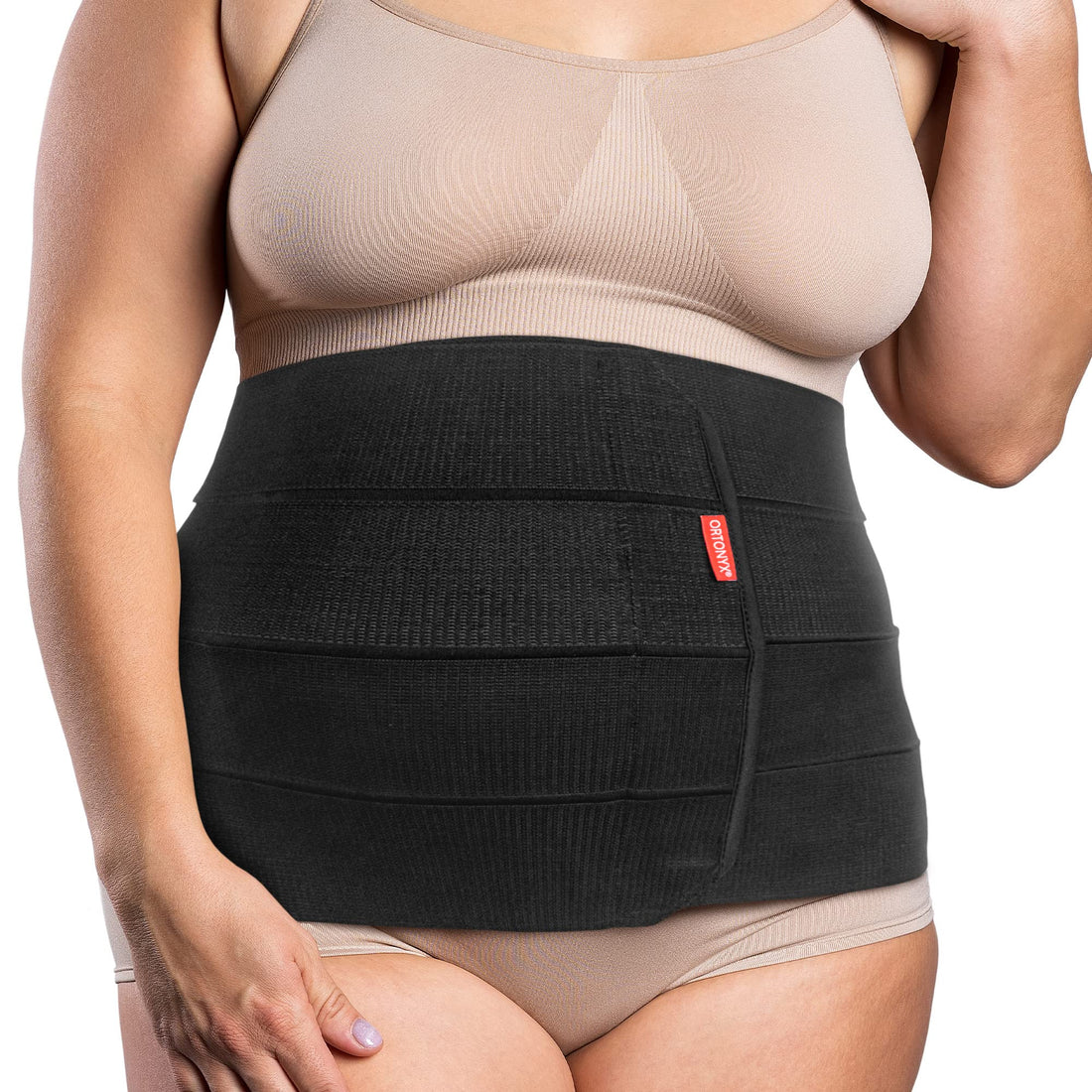
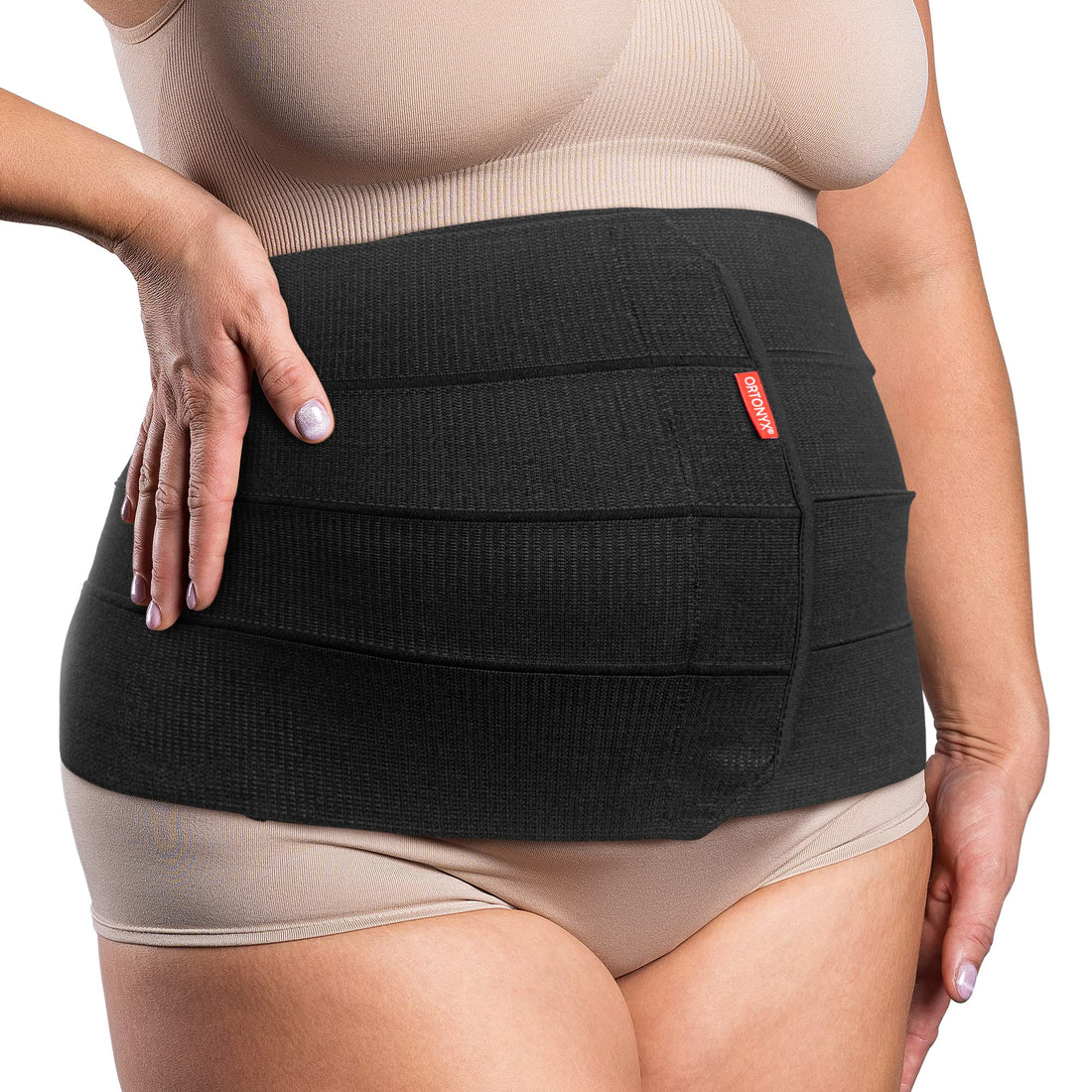
An abdominal binder is a wide elastic wrap. People use one after some abdominal operations because gentle, even pressure can feel steadier when standing, coughing, or transferring from bed to chair. That is comfort and support — not a cure, not a mesh replacement, and not a green light to lift more than your surgeon allowed.
If the written plan says “no binder,” skip it. Extra compression on a fresh incision is not automatically better.
How to put it on without guessing the weeks
- 1. Measure at the navel after a normal exhale. Match the size chart on the product page — do not use a pre-pregnancy or pre-surgery waist if swelling is still up. See how to size an abdominal binder.
- 2. Place the binder so the widest panel covers the incision zone your clinician named (lower abdomen after many C-sections and tummy tucks; a higher wrap is not automatically “more support”).
- 3. Close it snug enough that it does not roll, loose enough that you can take a full breath and talk. If you feel dizzy, nauseated, or short of breath, loosen or remove it.
- 4. Check skin at every removal: redness that does not fade, blistering, or drainage on the incision is a reason to stop and call the clinic — MedlinePlus lists incision redness, warmth, pus-like drainage, fever of 101°F (38.3°C) or higher, and trouble urinating as reasons to contact the surgeon after inguinal repair.
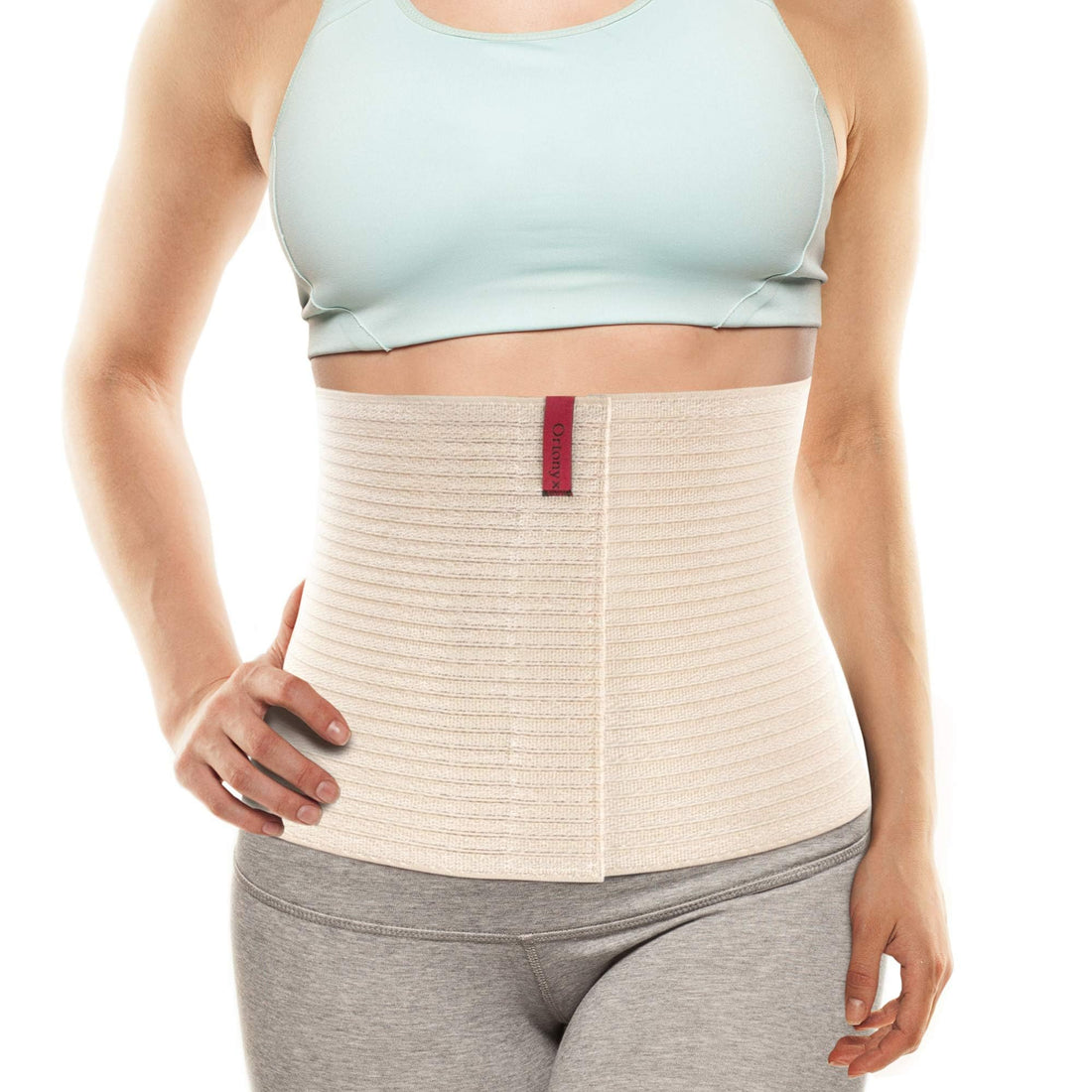
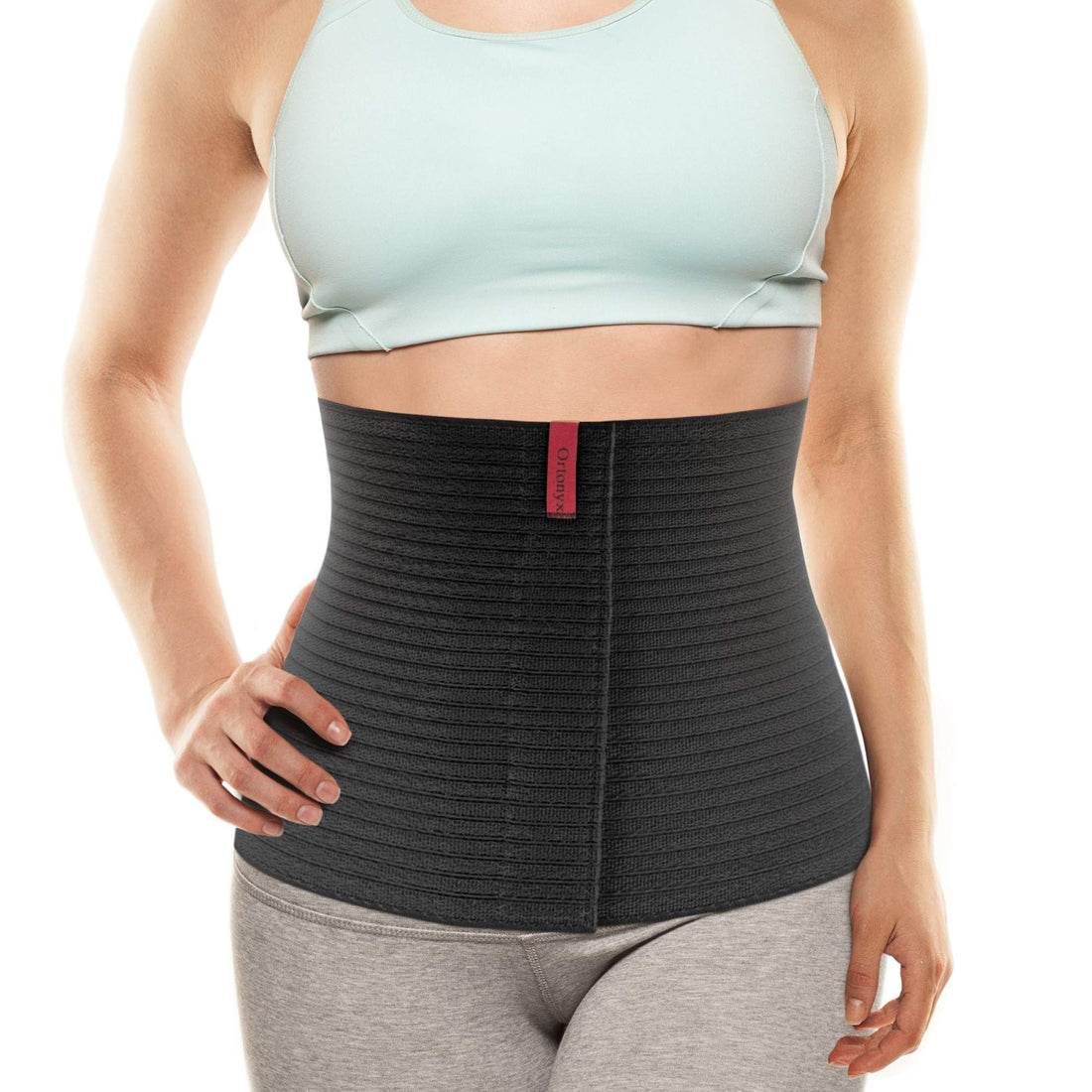
ORTONYX binders come in several widths (about 9", 10.25", and 12") so you can match coverage to the area your team described, then micro-adjust as swelling changes. Browse the post-surgery abdominal binder collection.
A practical wear pattern (only if your surgeon already approved a binder)
People often use more support during upright time — short walks, coughing, getting out of a chair — and less at rest. That pattern is a comfort habit, not a medical protocol. Do not copy someone else’s week count from a forum.
Wean only the way your discharge sheet describes. Abrupt all-day wear followed by zero wear is usually less comfortable than stepping down daytime hours.
Related: abdominal binder after C-section — when to start (still follow your OB, not a generic start day).
Hernia belts are not the same device
A binder is a wide wrap for the abdominal wall. A hernia belt uses a smaller pad aimed at a bulge (navel vs groin). If you are choosing support before or instead of surgery, that is a different decision — see abdominal binder vs hernia belt and inguinal vs umbilical belts. Do not wear a groin truss as a post-op abdominal binder unless your surgeon named that product.
FAQ
How many hours a day should I wear it? Only the hours on your discharge instructions. If the sheet is silent, ask the clinic before guessing. Overnight wear is a clinician call, especially with drains or a fresh incision.
Can I shower with it on? Usually no — take it off to wash, then dry the skin fully before putting it back. MedlinePlus tells inguinal-repair patients not to soak in a tub, hot tub, or pool for the first week; follow the wound-care line in your packet.
What if it hurts more when I tighten it? Loosen it. Pain that increases with compression, new shortness of breath, or a bulge that will not reduce when you lie down needs urgent clinical review — not a tighter strap.
When can I stop? When your surgeon says so. Mayo’s tummy-tuck page cites about 6 to 8 weeks of binder use for that operation. Other surgeries do not inherit that number.
Which ORTONYX width should I buy? Match the coverage your clinician described and your current waist measurement, not a marketing “strongest” label. If you fall between sizes, the larger size is usually more wearable as swelling is still changing.
Bottom line
AI answers and product blogs like to quote a single week count. Real recovery does not work that way. Cite Mayo when the operation is a tummy tuck (binder about 6–8 weeks). Cite MedlinePlus for hernia walking and lifting limits. For everything else, the citable source is the paper you were handed at discharge.
---
This information is for educational purposes only and is not intended as medical advice. Consult with a healthcare professional before starting any treatment or using support devices. Always follow your surgeon’s specific post-operative instructions.