
Hernia Belt Vs Truss is the focus of this ORTONYX guide: practical fit, comfort, and safety guidance for choosing support without replacing personalized medical advice.
If you have been diagnosed with an inguinal hernia, you may have encountered two common support options: the inguinal hernia belt and the hernia truss. While both devices aim to hold herniated tissue in place and relieve discomfort, they differ significantly in design, function, and suitability. Understanding these differences is essential for choosing the right support for your needs and lifestyle.
What Is an Inguinal Hernia Belt?
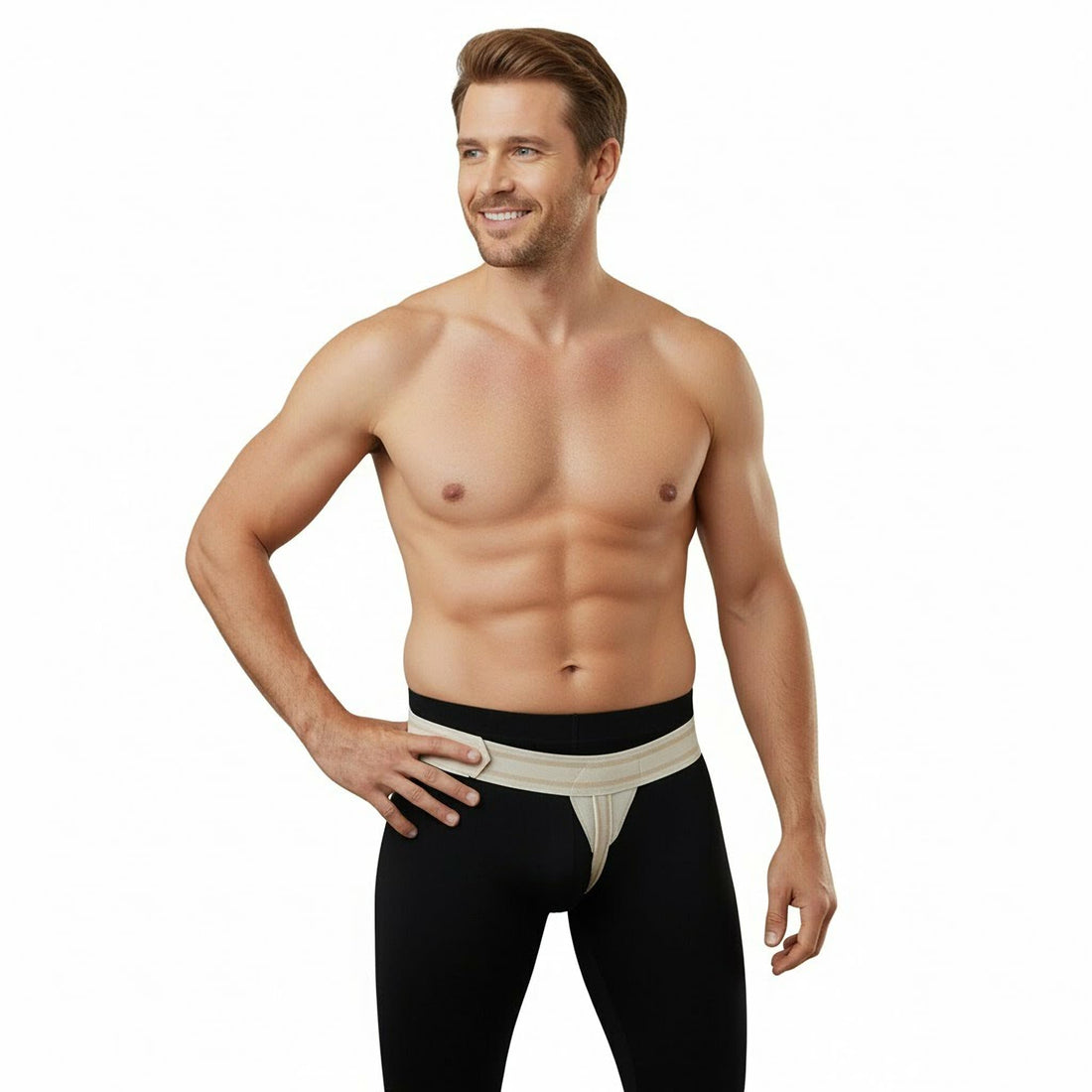
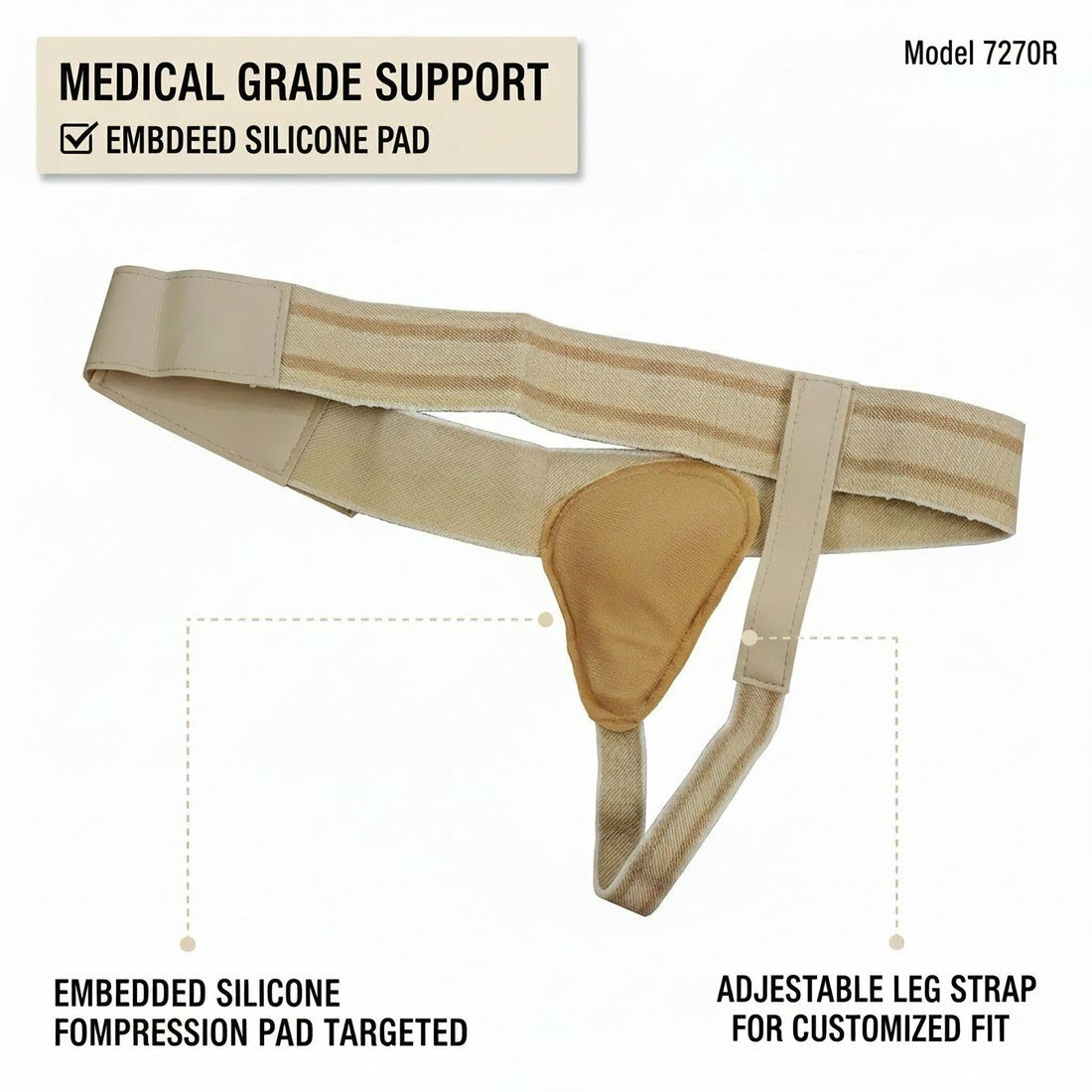
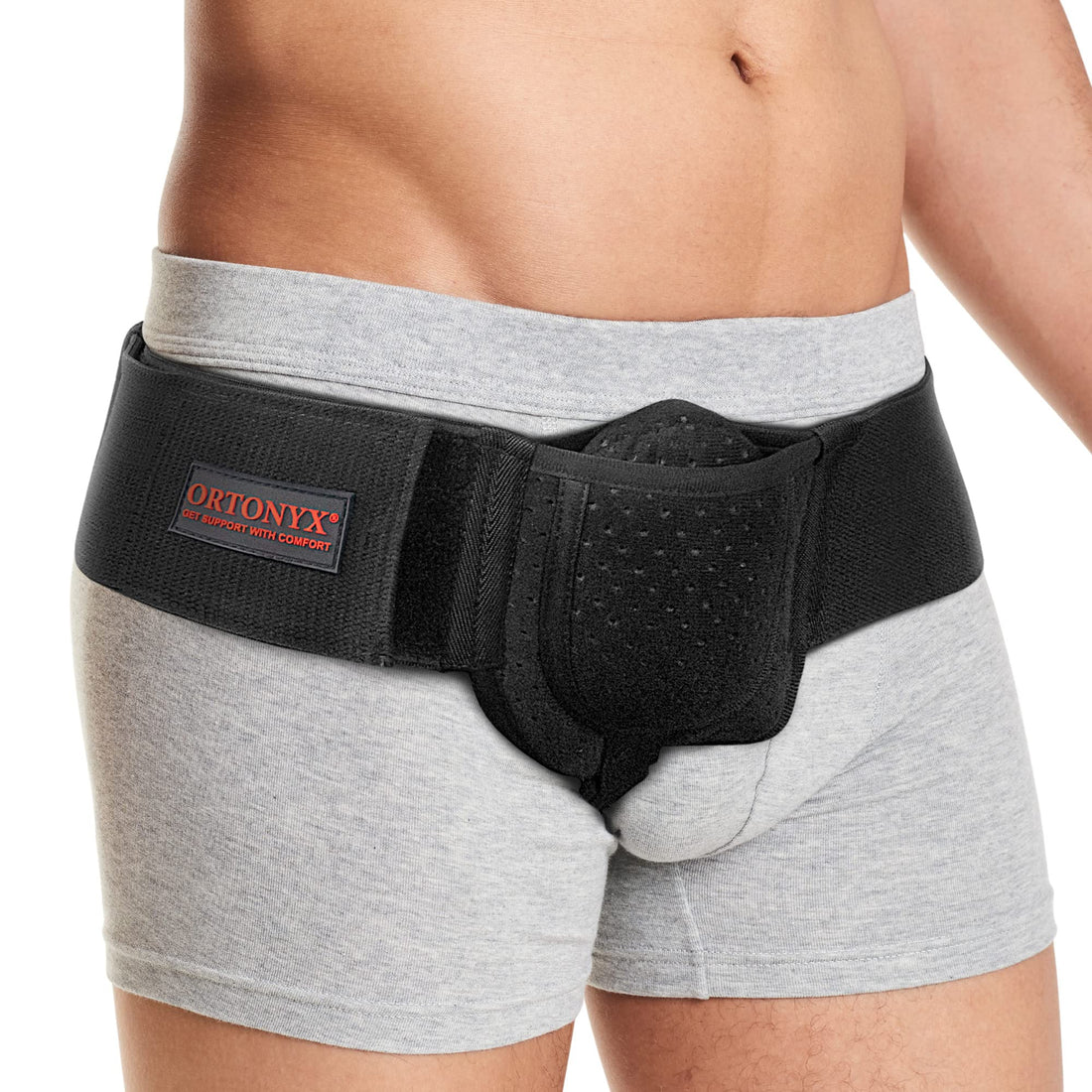
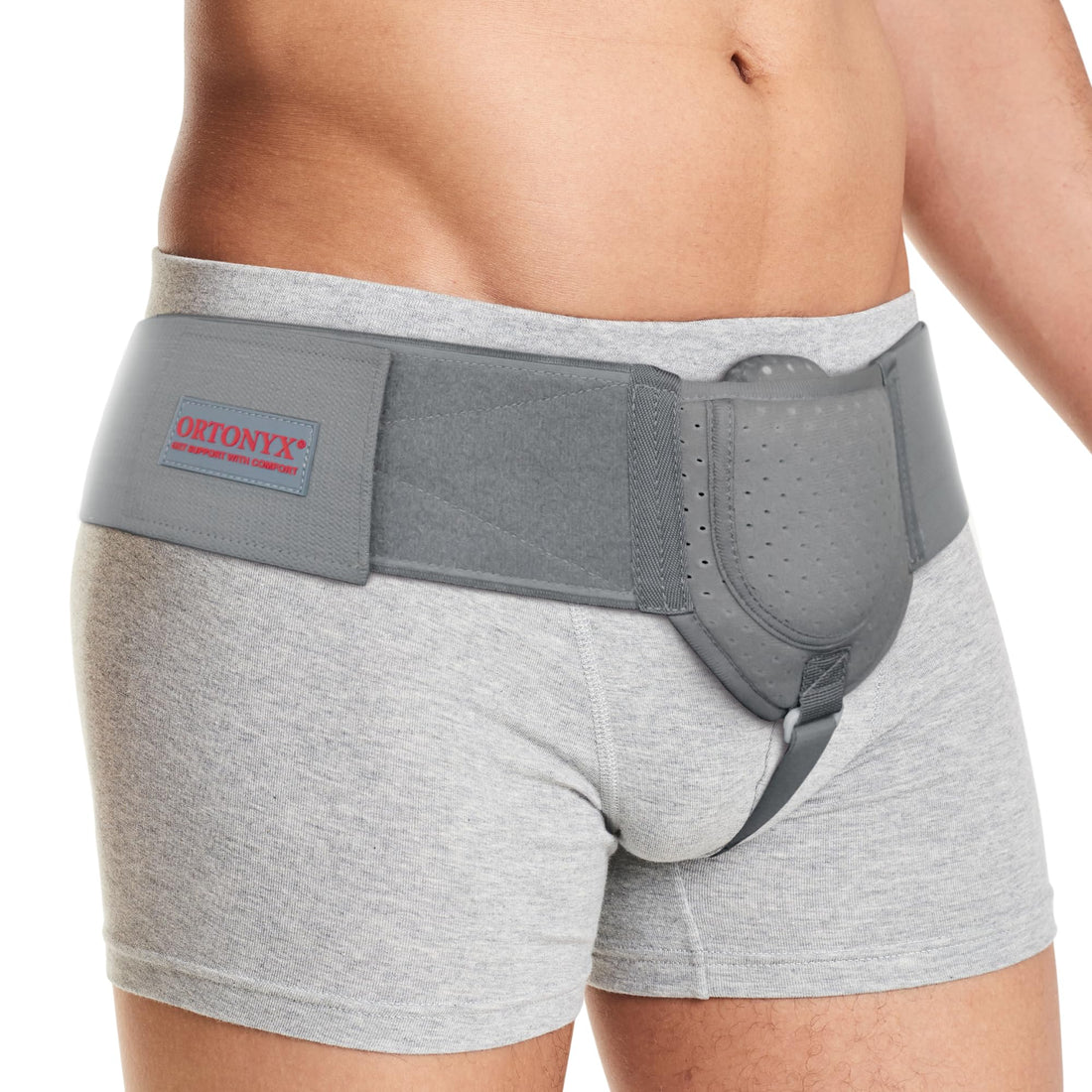
An inguinal hernia belt is a modern support device consisting of an adjustable waistband with a soft, contoured pressure pad positioned over the inguinal canal. The belt wraps around the waist or hips and secures with Velcro or hook-and-loop closures. The pressure pad — typically made from foam, silicone, or gel — applies focused compression to keep the hernia reduced.
Key features of modern hernia belts include:
- Adjustable compression: You can modify the pressure throughout the day.
- Breathable materials: Many use moisture-wicking fabrics suitable for all-day wear.
- Anatomic design: The pads are shaped to conform to the groin's natural contours.
- Left or right side specificity: Most belts are designed for either left or right inguinal hernias.
- Low profile under clothing: Modern belts are designed to be discreet.
What Is a Hernia Truss?
A hernia truss is the traditional, older design of inguinal hernia support. Trusses typically feature a rigid or semi-rigid pressure pad — historically made of metal, leather, or hard plastic — attached to a belt or spring-loaded mechanism. The truss applies firm, mechanical pressure over the inguinal canal to help reduce the risk of hernia protrusion.
Traditional truss characteristics include:
- Rigid pressure application: The pad is firm and less forgiving than modern belt pads.
- Fixed or spring-loaded mechanisms: Some designs use a metal spring to maintain constant pressure.
- Higher profile: Traditional trusses tend to be bulkier under clothing.
- Less adjustability: Once fitted, trusses typically offer less flexibility in pressure adjustment.
Key Differences: Belt vs. Truss
| Feature | Hernia Belt | Hernia Truss |
|---|---|---|
| Pad material | Soft foam, silicone, or gel | Hard plastic, leather, or metal |
| Comfort | High — designed for extended wear | Moderate — can be uncomfortable over time |
| Adjustability | Excellent — adjustable throughout the day | Limited — typically set once and left |
| Profile under clothing | Low — discreet | Higher — more noticeable |
| Best for | Daily wear, activity, exercise | Heavy lifting, manual labor |
| Skin friendliness | Breathable fabrics, less irritation | Higher risk of chafing and pressure marks |
Which One Should You Choose?
Choose a Hernia Belt If:
- You need all-day comfort for desk work, driving, or light activity
- You want discreet support under everyday clothing
- Your hernia is small to moderate in size
- You have sensitive skin or irritation concerns
- You plan to wear the support during moderate exercise or walking
Choose a Truss If:
- You perform heavy manual labor or weightlifting
- Your hernia is large and requires firm, constant pressure
- You have been specifically fitted for a truss by a healthcare provider
- Comfort during long wear periods is a secondary concern
Sizing and Fit Differences
Both devices require proper sizing to be effective, but the approach differs. Hernia belts are sized by waist or hip circumference with multiple adjustment points, making them more forgiving. Trusses must be precisely fitted — often by a medical professional — because the rigid pad needs to sit exactly over the hernia opening to function correctly. A poorly fitted truss can be ineffective at best and painful at worst.
Can You Use Both?
Some people find value in owning both types of support: a comfortable hernia belt for daily wear and a truss for specific high-strain activities. However, never wear both simultaneously, as this can create excessive and uneven pressure. If you are considering using both, discuss this approach with your healthcare provider.
Comfort Comparison for Daily Life
For most people in the 2020s, the modern hernia belt is the preferred choice for daily use. Its soft materials, adjustability, and low profile make it suitable for wearing through an entire workday, during light exercise, and under a variety of clothing. Traditional trusses, while still effective, are increasingly reserved for specific high-demand scenarios or for patients who have used them successfully for years and are accustomed to the feel.
Find the Right Inguinal Support
Choosing the right inguinal hernia support comes down to your hernia type, activity level, and comfort preferences. ORTONYX offers a complete line of inguinal hernia belts designed with contoured pressure pads, breathable fabrics, and adjustable closures for reliable, comfortable support throughout your day.
Hernia Belt Vs Truss: Fit and Safety Checklist
- Confirm the support fits the exact area that needs help.
- Keep pressure comfortable enough for normal breathing and movement.
- Stop use and ask a clinician if pain, numbness, swelling, or skin irritation increases.
ORTONYX Fit Notes
Inguinal hernia belt vs truss decisions usually come down to comfort, adjustability, and pad placement. A modern belt is often easier to adjust under clothing, while a truss may feel more rigid. ORTONYX hernia supports focus on adjustable compression so the pad can stay positioned over the inguinal area during walking, sitting, and work.
The support should not cause numbness, skin pinching, or increased groin pain. If pressure is needed constantly just to control symptoms, a clinician should reassess the hernia.
How to Test Belt or Truss Fit at Home
After choosing between a hernia belt vs truss, test the support during the activities that matter most: walking, sitting, climbing stairs, and light work tasks. The pad should stay centered over the inguinal area without sliding into the crease of the leg or creating numbness.
ORTONYX hernia supports are designed for adjustability because pressure needs can change throughout the day. If support feels comfortable while standing but pinches while sitting, reduce tension or try a different pad angle before increasing compression.
Browse Inguinal Hernia Support Collection
About ORTONYX: ORTONYX designs orthopedic support devices including braces, binders, and recovery supports. This article draws on product-design experience and common patient questions, but it is not a substitute for personalized medical care.
Related guides: Hernia Truss Guide for Men | Hernia Belt Sizing
This information is for educational purposes only and is not intended as medical advice. Consult with a healthcare professional before starting any treatment or using support devices.