
Shoulder Brace Rotator Cuff is the focus of this ORTONYX guide: practical fit, comfort, and safety guidance for choosing support without replacing personalized medical advice.
A rotator cuff injury can make even the simplest movements — reaching for a cup, getting dressed, sleeping on your side — feel impossible. Whether your injury is from an acute tear, repetitive strain, or post-surgical recovery, a shoulder brace for rotator cuff support can provide meaningful pain relief and protection during the healing process. This guide explains how shoulder braces work and how to choose the right one for your stage of recovery.
Understanding Rotator Cuff Injuries
The rotator cuff is a group of four muscles and their tendons that stabilize the shoulder joint and enable arm rotation and lifting. Injuries range from:
- Tendonitis: Inflammation of the rotator cuff tendons, often from overuse or repetitive overhead activity.
- Partial tears: The tendon is damaged but not completely severed. Many partial tears are managed without surgery.
- Full-thickness tears: The tendon is completely detached from the bone. These often, though not always, require surgical repair.
- Post-surgical recovery: After rotator cuff repair surgery, the shoulder must be protected for 4 to 6 weeks while the tendon heals to the bone.
How a Shoulder Brace Helps
Shoulder braces support rotator cuff recovery through several mechanisms:
- Immobilization: Post-surgical braces limit shoulder movement to protect the repair during the critical early healing phase.
- Compression: Gentle compression around the shoulder joint reduces swelling and provides a comforting sense of stability.
- Positioning: Some braces hold the arm in a slightly abducted position — away from the body — which reduces tension on the repaired or injured tendon.
- Proprioceptive feedback: The brace reminds you to avoid certain movements that could reinjure the healing tendon.
Types of Shoulder Braces
Abduction Slings (Post-Surgical)
After rotator cuff repair, surgeons typically prescribe an abduction sling that holds the arm away from the body at a 15 to 30-degree angle. This position minimizes tension on the repaired tendon and optimizes blood flow to the healing tissue. The sling includes a pillow or wedge between the arm and body and is worn continuously — including during sleep — for 4 to 6 weeks, as directed by the surgeon.
Compression Shoulder Sleeves
For tendonitis, partial tears, or chronic shoulder pain, a compression sleeve provides gentle support and warmth without immobilization. These are suitable for daily activities, light exercise, and situations where full shoulder mobility is needed.
Shoulder Stabilizer Braces
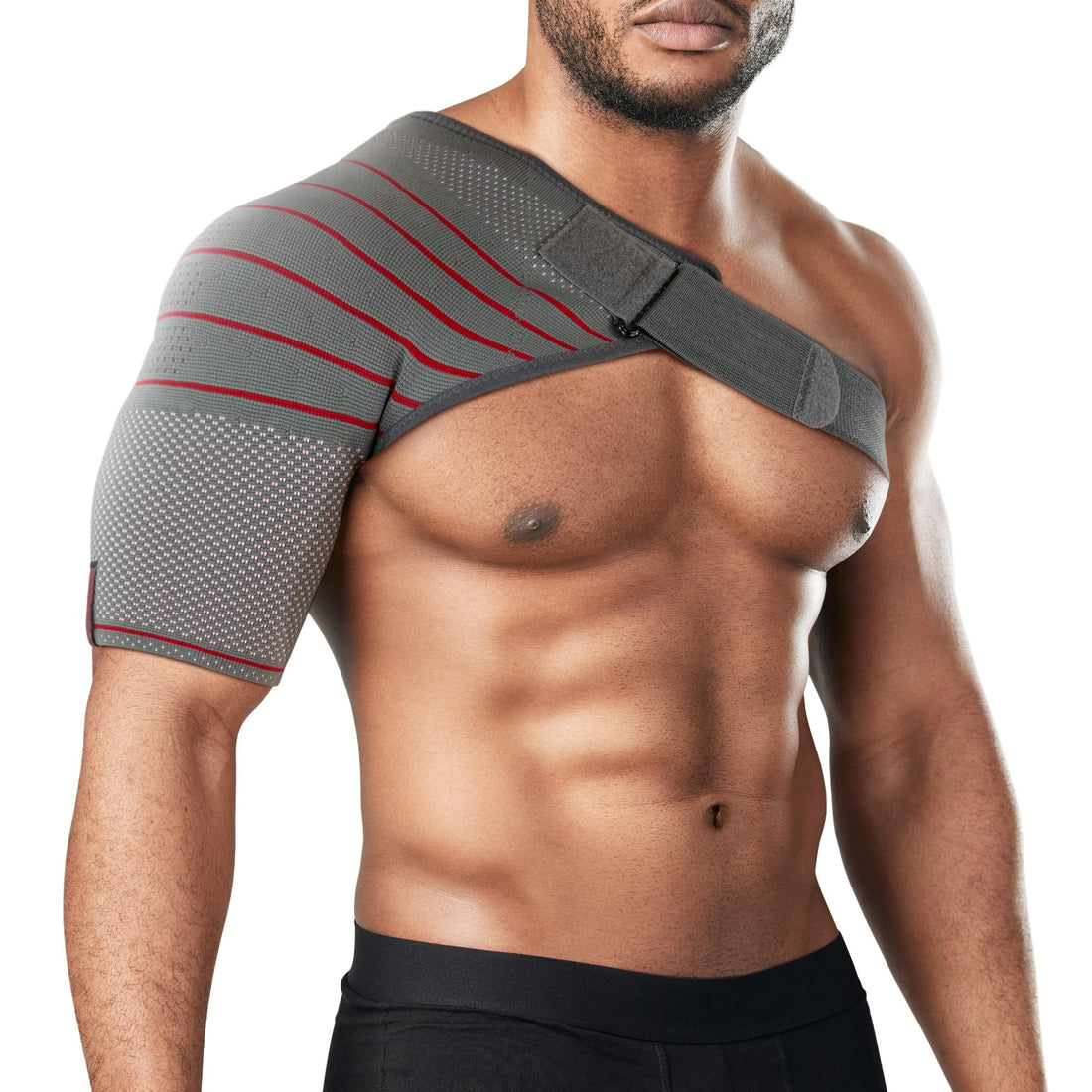
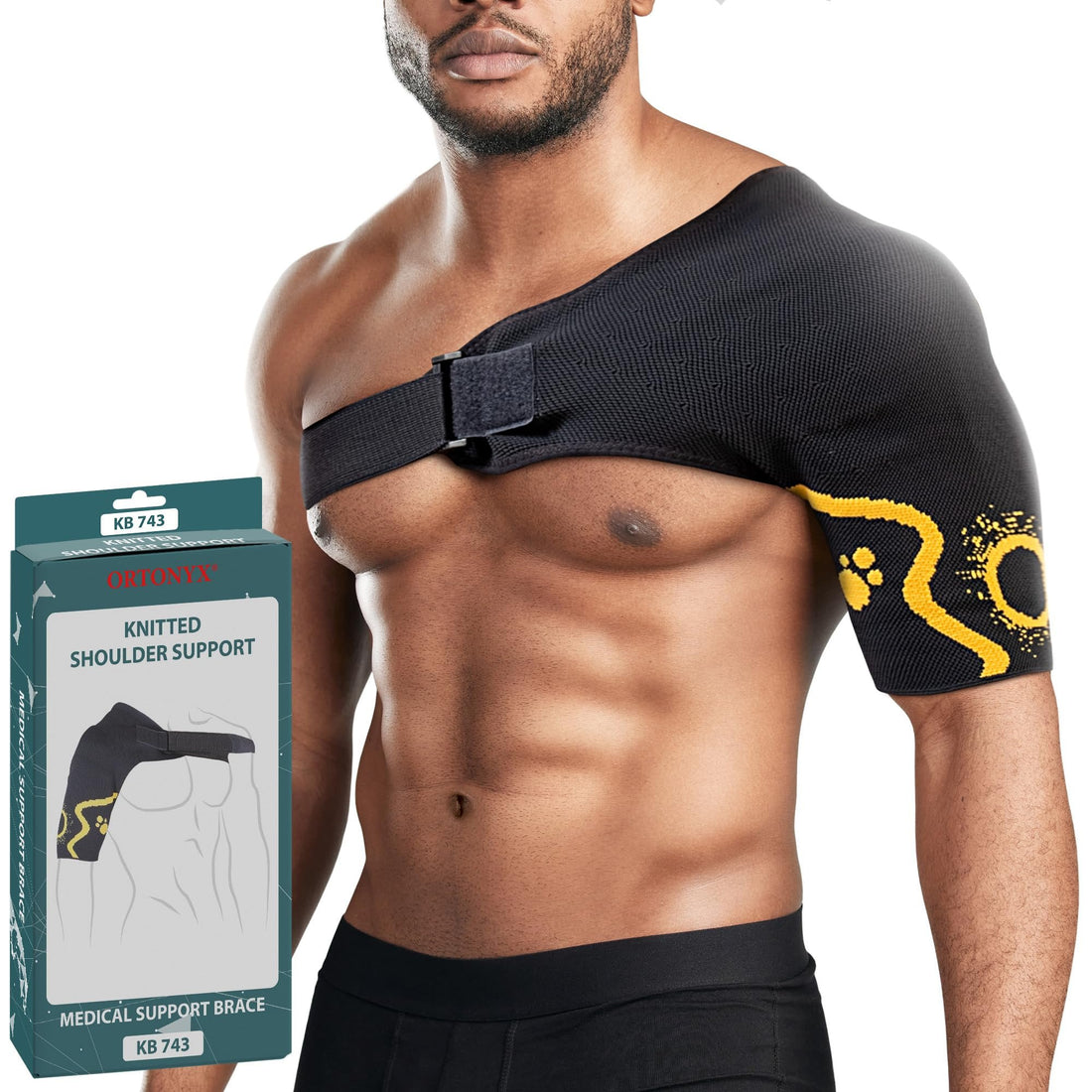
These braces feature adjustable straps that cross the chest and back to stabilize the shoulder joint. They limit extreme ranges of motion without fully immobilizing the arm and are appropriate for moderate injuries, shoulder instability, and the transition period after the abduction sling is discontinued.
Recovery and Rehab Stages
- Phase 1 (Weeks 1 to 6): Protection. The arm is in an abduction sling. Only passive range-of-motion exercises — where a therapist moves your arm for you — are performed.
- Phase 2 (Weeks 6 to 12): Early mobilization. The sling is discontinued. Active-assisted exercises begin, where you use your uninjured arm or a pulley to help move the recovering arm. A stabilizer brace may replace the sling.
- Phase 3 (Weeks 12 to 16): Strengthening. Resistance band exercises and light weights are introduced. A compression sleeve may be used during activity for comfort.
- Phase 4 (Months 4 to 6): Return to activity. Sport-specific training begins. Full recovery can take 6 to 12 months.
Tips for Shoulder Brace Use
- Follow your surgeon's protocol exactly: After surgery, the timeline for sling use and progression is critical. Removing the sling too early can compromise the repair.
- Protect your skin: Wear a thin cotton layer under the sling straps to help reduce the risk of chafing, particularly in warm weather.
- Sleep with support: If you must sleep in the sling, use pillows to prop the arm and help reduce the risk of rolling onto the injured shoulder.
- Ice regularly: Apply ice packs for 15 to 20 minutes several times daily to reduce swelling, particularly in the first 2 weeks after injury or surgery.
Find Your Shoulder Support
Recovering from a rotator cuff injury demands patience, consistency, and the right support at each stage of healing. ORTONYX offers shoulder braces and supports designed for every phase — from post-surgical immobilization to active recovery.
Shoulder Brace Rotator Cuff: Fit and Safety Checklist
- Confirm the support fits the exact area that needs help.
- Keep pressure comfortable enough for normal breathing and movement.
- Stop use and ask a clinician if pain, numbness, swelling, or skin irritation increases.
ORTONYX Fit Notes
A shoulder brace for rotator cuff support should reduce unwanted movement while allowing the recovery plan to progress as directed. ORTONYX shoulder supports are designed for adjustable compression and positioning, which can help during daily tasks when the shoulder feels vulnerable.
Do not use a brace to ignore sharp pain, sudden weakness, or loss of motion. Rotator cuff injuries vary widely, so fit and wearing time should match the medical evaluation and clinician’s recovery instructions.
Related ORTONYX guides: Chest Support Brace: Recovery, Protection, and When You Need One
Using Shoulder Support Without Over-Relying on It
A shoulder brace should support comfort and controlled positioning, but it should not replace the recovery plan from your clinician or physical therapist. Wearing support during vulnerable activities can be helpful, while overusing it during rest may make the shoulder feel stiff.
ORTONYX shoulder supports work best when adjusted for the task. Use lighter compression for desk work or rest, and firmer support only when needed for short periods of movement. Stop and reassess if numbness, swelling, or sharp pain increases.
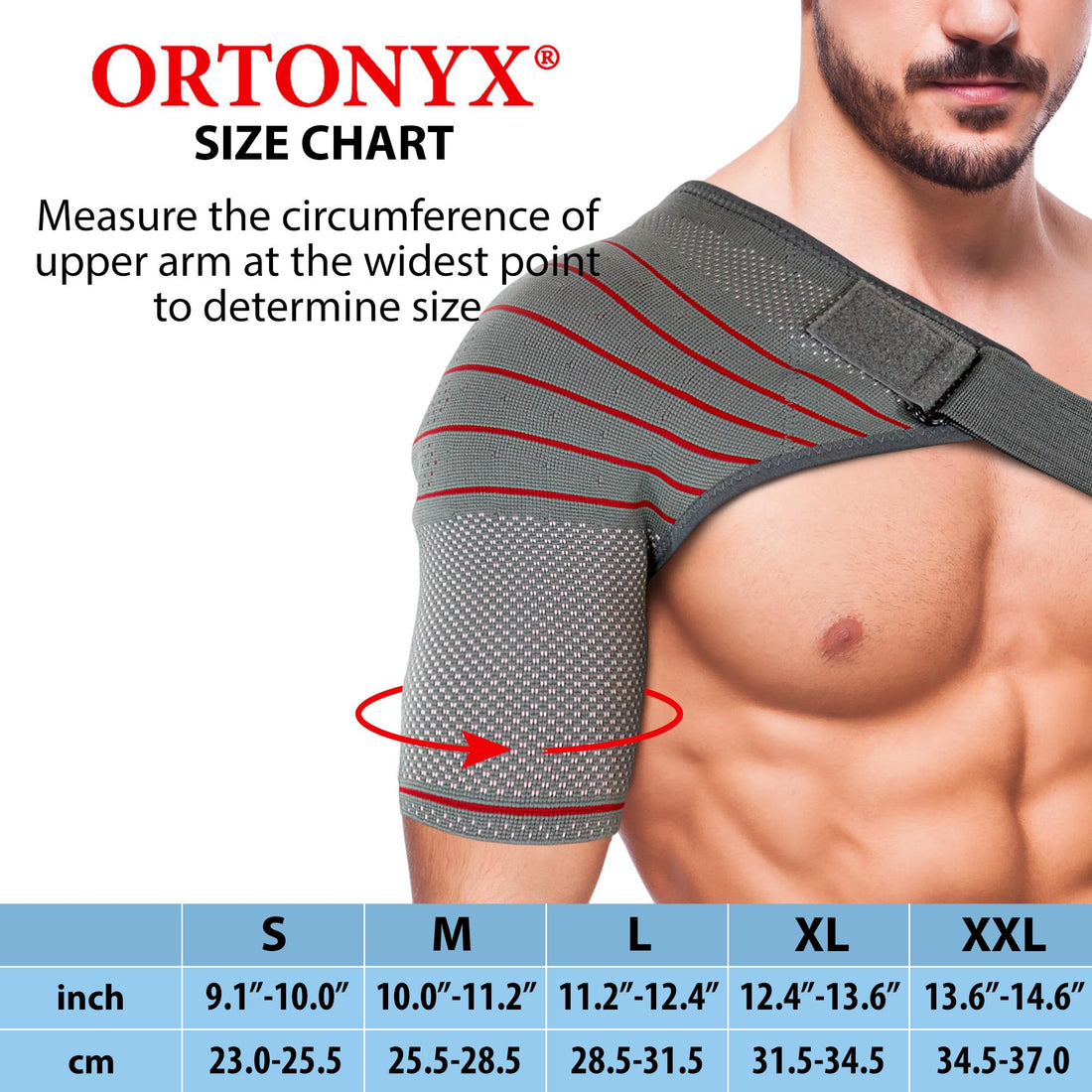
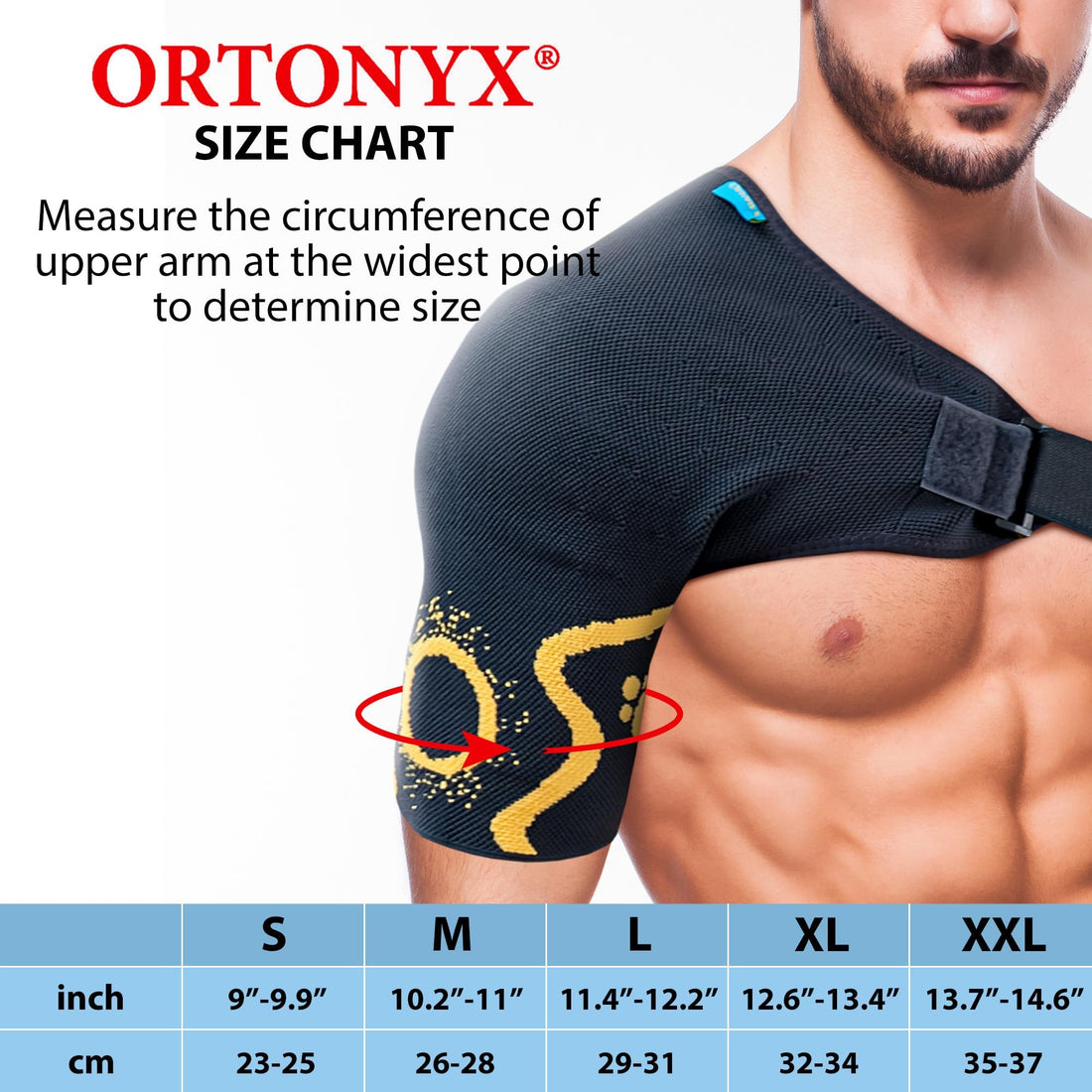
Fit should also be checked under normal clothing. A shoulder brace that bunches under the arm or pulls the neck forward may need different strap tension or a different support style.
Browse Shoulder Support Collection
About ORTONYX: ORTONYX designs orthopedic support devices including braces, binders, and recovery supports. This article draws on product-design experience and common patient questions, but it is not a substitute for personalized medical care.
Related guides: Clavicle Brace Recovery
This information is for educational purposes only and is not intended as medical advice. Consult with a healthcare professional before starting any treatment or using support devices.