
A cesarean section is major abdominal surgery — even though it's one of the most common surgical procedures in the world. Your surgeon cut through skin, fat, fascia, and muscle to bring your baby into the world. That incision needs time to heal, and your body needs support during the process.
If you're weeks or even days out from a C-section, here's what you need to know about using an abdominal binder to support your recovery.
Why C-Section Recovery Is Different
A C-section isn't like other abdominal surgeries. You're not just recovering — you're simultaneously caring for a newborn, dealing with hormonal shifts, potentially breastfeeding, and managing on fragmented sleep. Your body is asking you to heal from surgery while running a 24/7 operation.
That's exactly why support matters so much. An abdominal binder takes some of the physical burden off your healing body so you can focus on everything else.
What Happens to Your Body During a C-Section
Understanding what was affected helps you understand why recovery takes time:
- The incision cuts through 7 layers of tissue — skin, subcutaneous fat, Scarpa's fascia, the rectus sheath, the rectus muscles (separated, not cut), the peritoneum, and finally the uterus
- Your abdominal muscles were physically separated to access the uterus. Even though they weren't cut, they need time to come back together
- Internal swelling is significant and peaks 3-5 days after surgery
- Your uterus is healing its own incision internally while simultaneously shrinking back toward its pre-pregnancy size
- Nerve damage around the incision is normal — that numbness or tingling around the scar is severed nerve endings healing
How an Abdominal Binder Helps After C-Section
Incision Support and Protection
Every time you stand up, sit down, cough, laugh, sneeze, or pick up your baby, your abdominal muscles engage — and every one of those movements pulls on your healing incision. A binder holds everything stable, reducing the stress on the wound with every movement.
This isn't just about comfort. Reduced tension on the incision can contribute to better wound healing and a thinner, flatter scar.
Pain Reduction
The compression from a binder provides immediate, noticeable pain relief for most women. It's the same principle as holding a pillow against your belly when you cough — external support reduces internal strain. But a binder does it consistently, without you having to think about it.
Swelling Management
Post-surgical swelling in the abdomen can be substantial after a C-section. The combination of surgical trauma, IV fluids, and the body's inflammatory response means you may actually look more swollen at day 3-5 than you did immediately after delivery. Gentle compression helps your lymphatic system move that fluid out.
Confidence to Move
Early movement after a C-section is one of the most important factors in preventing complications like blood clots, adhesions, and prolonged recovery. But when every step hurts, it's hard to make yourself get up. A binder gives you the physical support and psychological confidence to start moving sooner.
Diastasis Recti Support
During pregnancy, your rectus abdominis muscles (the "six-pack" muscles) separate along the midline to make room for the baby. This is called diastasis recti, and it's nearly universal by the third trimester. A binder gently holds these muscles closer together while they heal, supporting the natural closure process.
When to Start Wearing a Binder After C-Section
Hospital (Day 0-3)
Many hospitals provide abdominal binders immediately after C-section. If yours doesn't, bring one in your hospital bag. Starting compression early — as soon as your medical team approves — maximizes the benefit during the peak swelling period.
Some women find the binder uncomfortable in the first 24 hours when the incision is most sensitive. That's okay — wait until you're ready. Even starting on day 2 or 3 is beneficial.
First Two Weeks (Day 3-14)
This is when the binder does its heaviest work. Wear it during all waking hours if comfortable. The incision is still closing, swelling is resolving, and your muscles are at their weakest point.
Remove it for:
- Showering
- Brief skin-breathing breaks (15-20 minutes, 2-3 times daily)
- Sleeping, if it's uncomfortable (many women prefer to keep it on at night)
Weeks 3-6
As your incision heals and pain decreases, start transitioning to activity-based wear. Focus on wearing the binder during:
- Times when you're most active (household tasks, outings)
- Extended periods of standing
- When carrying or nursing the baby
- Exercise, once cleared by your doctor
After 6 Weeks
By your 6-week postpartum checkup, most women are significantly healed. Some continue wearing the binder during exercise or on particularly active days. Others are ready to stop entirely. Follow your body's cues and your doctor's guidance.
Choosing the Right Binder for C-Section Recovery
Width
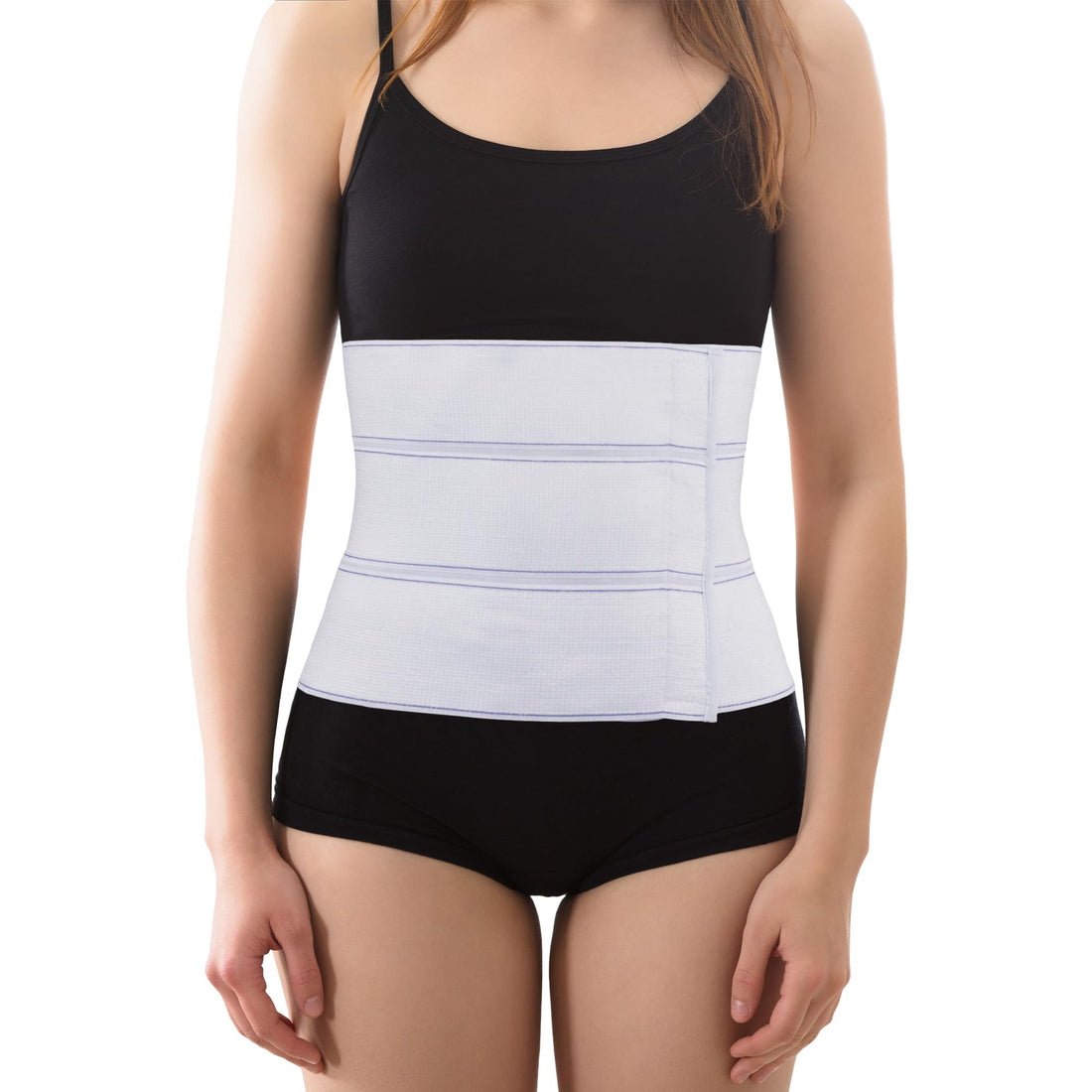
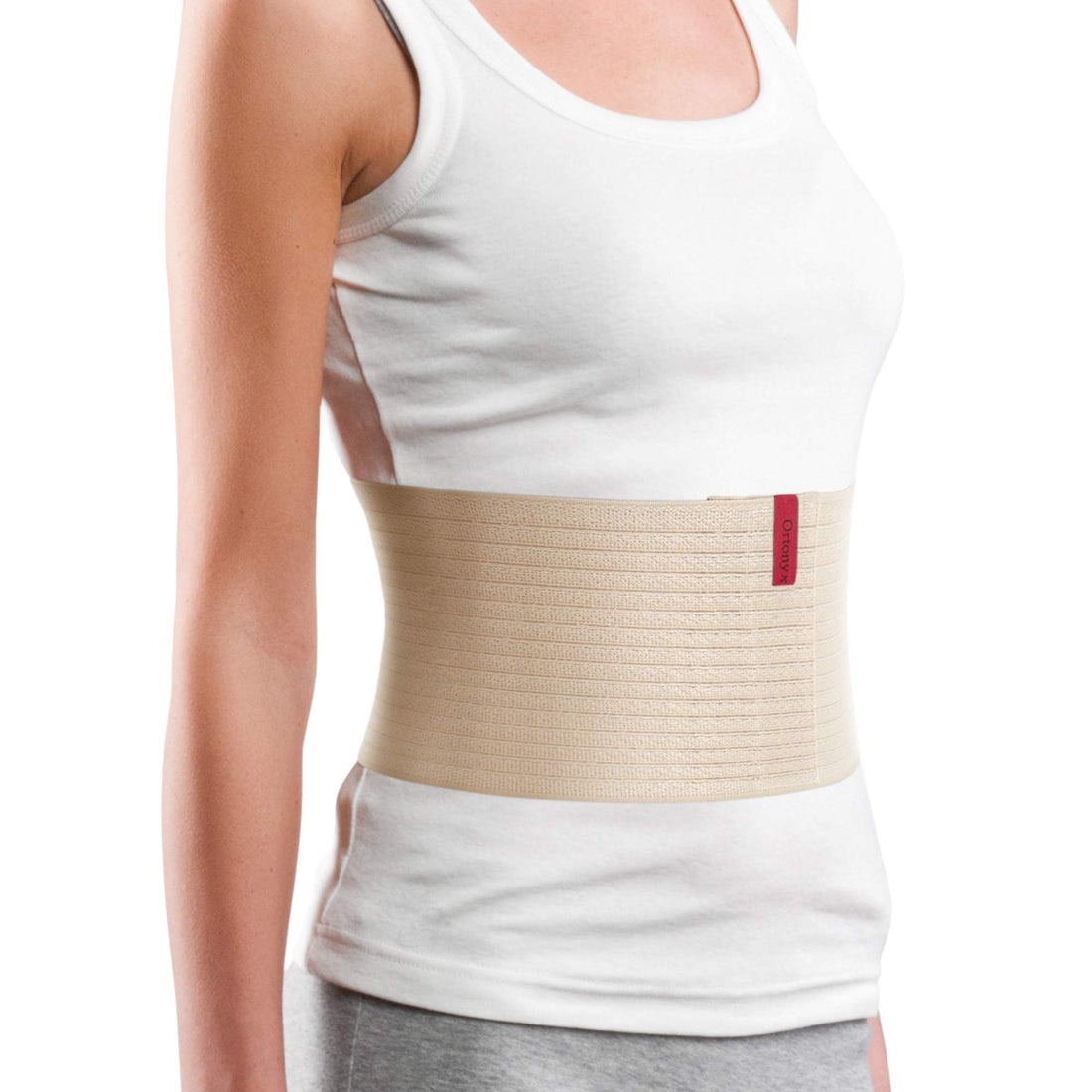
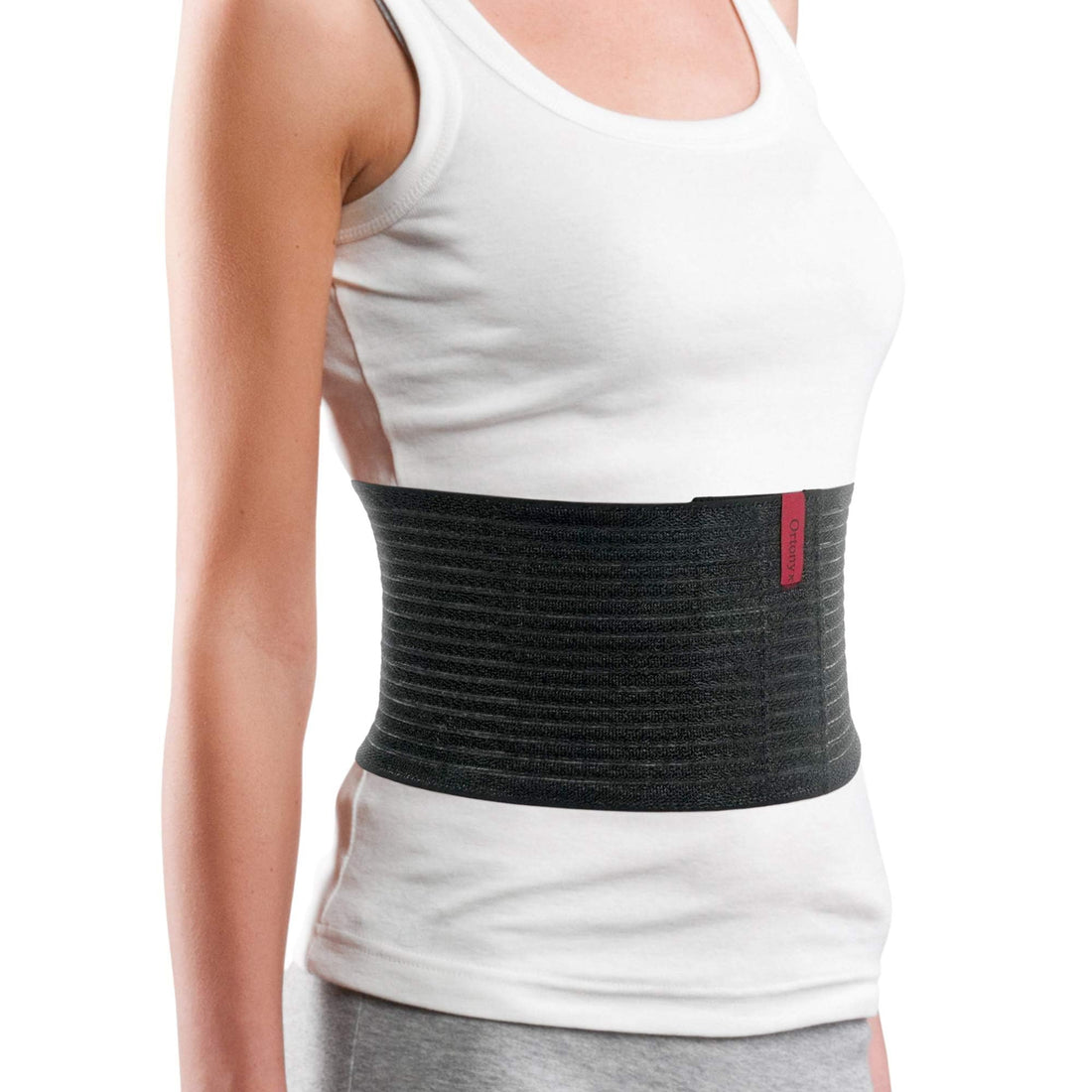
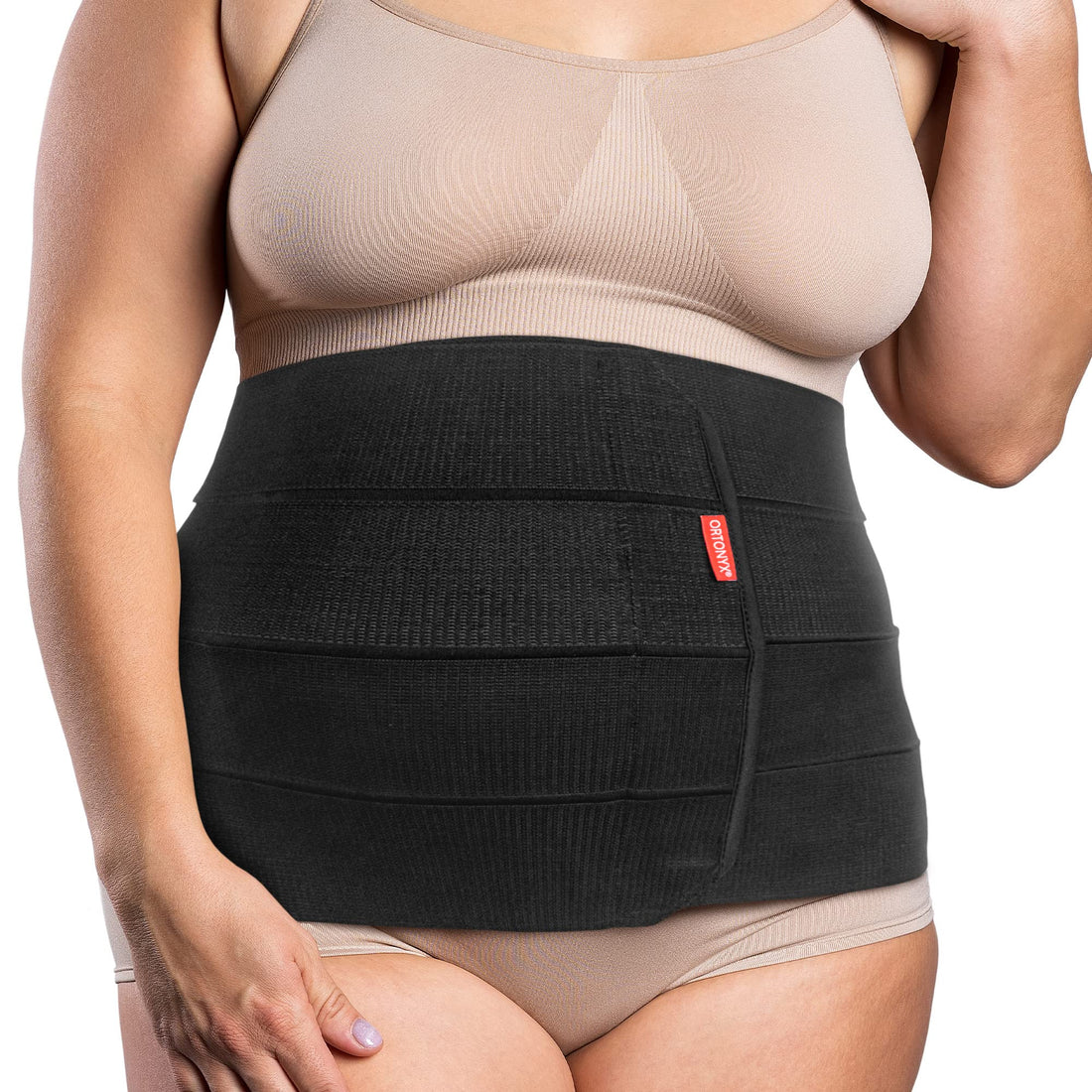
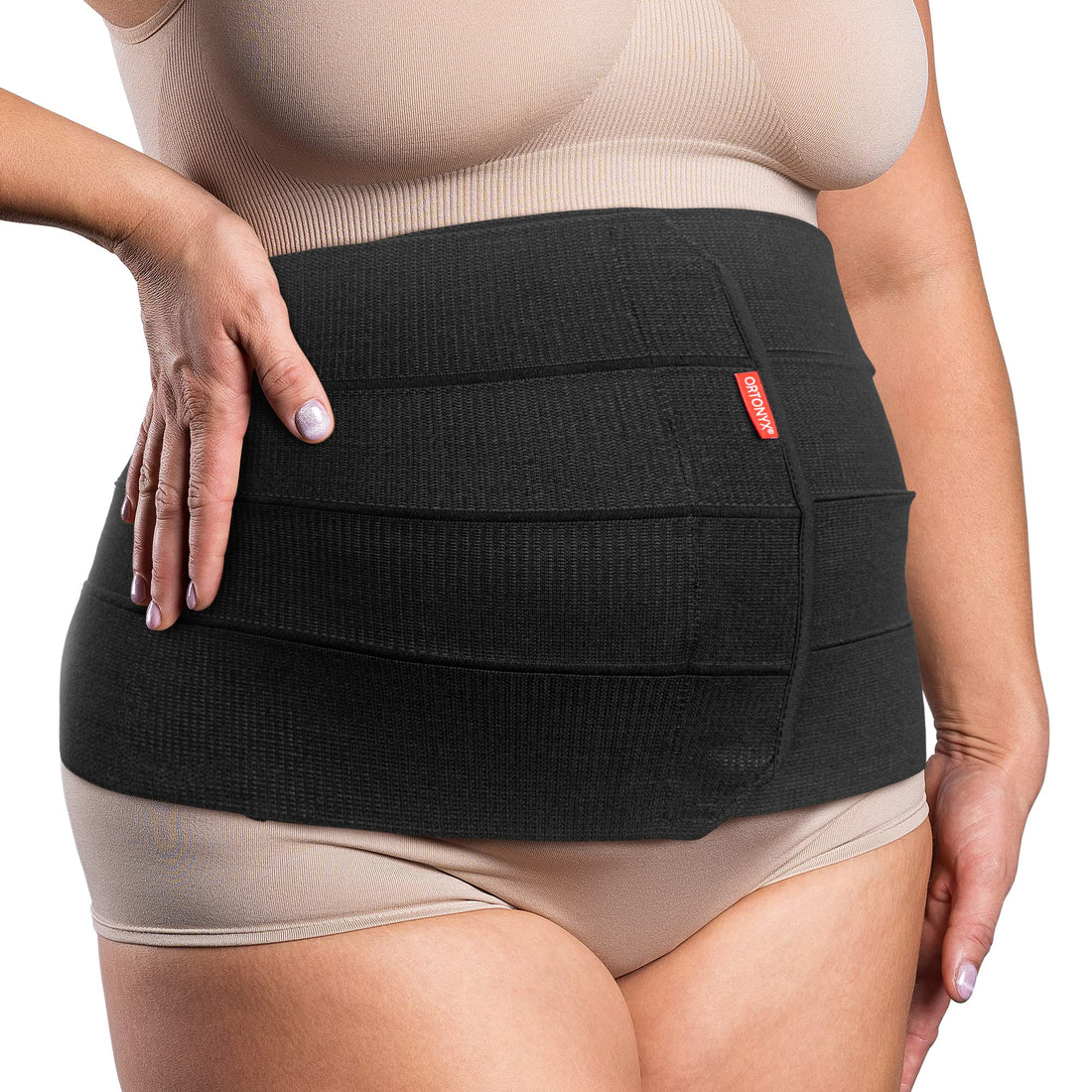
For C-section recovery, a binder 9-12 inches wide provides the best combination of incision coverage, abdominal support, and comfort. Narrower binders may not fully cover the incision area, while wider ones can restrict breathing or ride up.
Closure Type
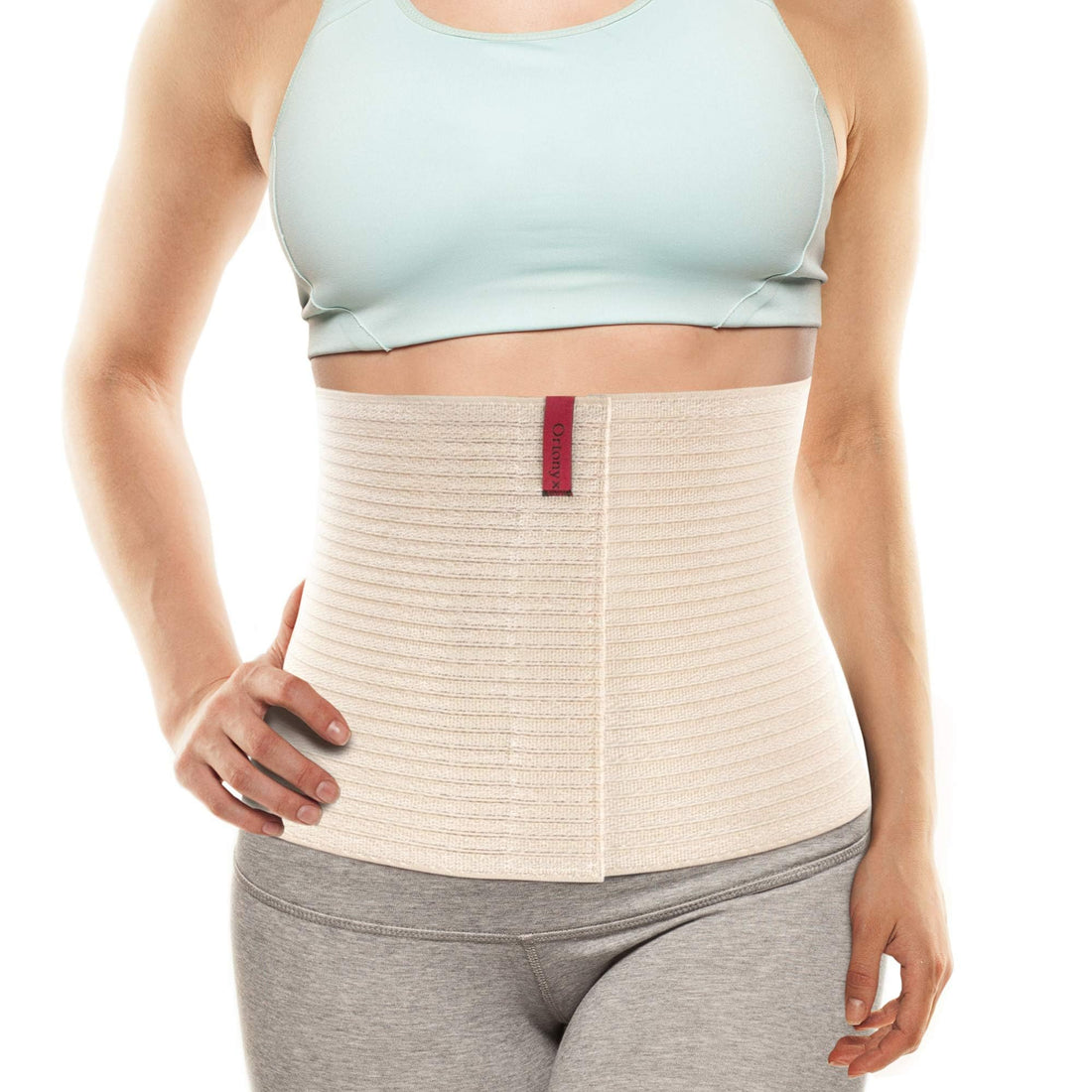
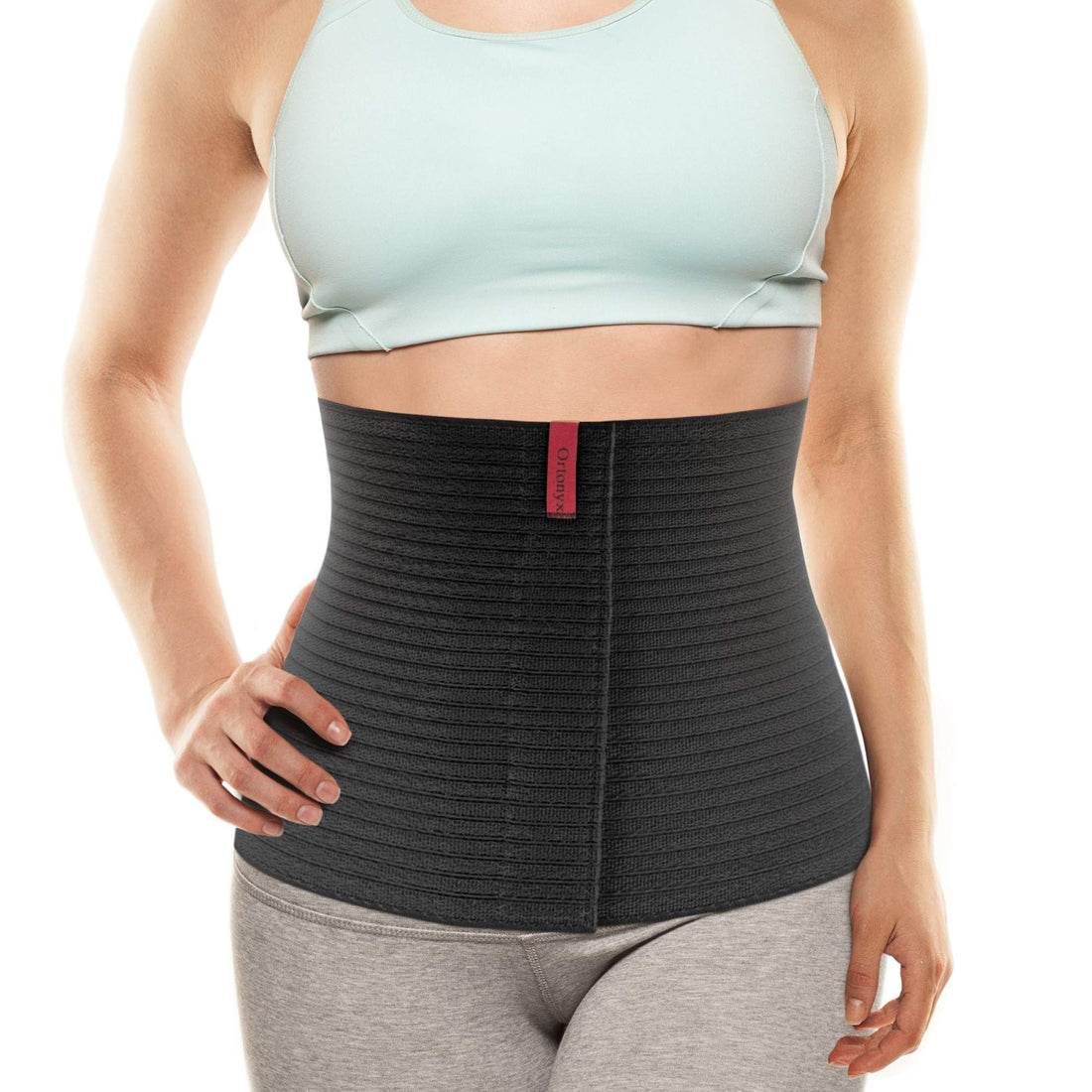
Wrap-around binders with full Velcro closure are ideal for postpartum use because:
- You can put them on without bending over (important when bending hurts)
- Compression is adjustable as swelling changes day to day
- They accommodate the rapid body changes of postpartum recovery
Material
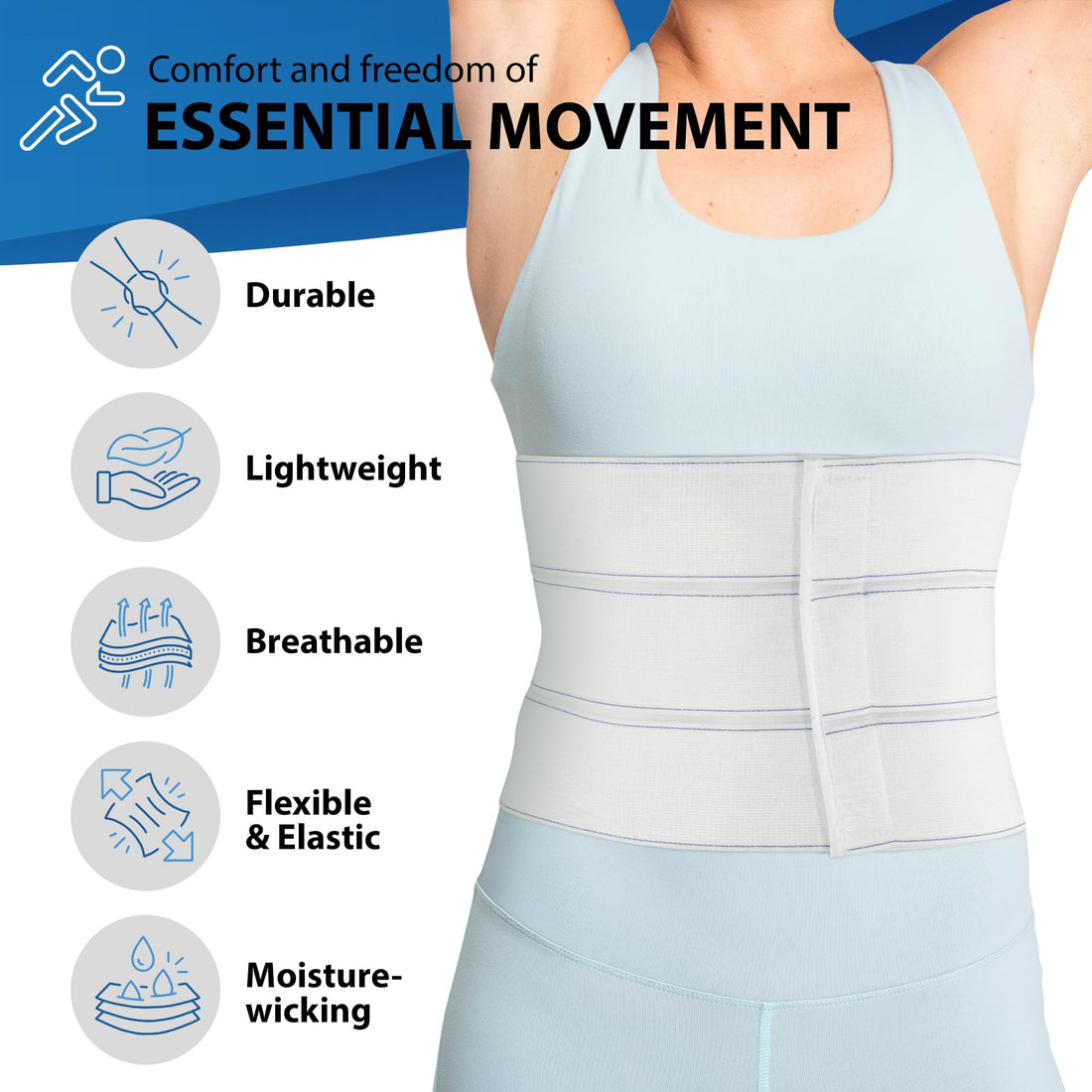
Soft, breathable materials are essential. Your skin is extra sensitive postpartum, and you may be dealing with night sweats, hot flashes, and hormonal temperature fluctuations. A binder that traps heat against a fresh incision is a recipe for irritation.
Avoid These Features
- Boning or rigid stays pressing directly on the incision area
- Very tight compression garments (like waist trainers) — these put too much pressure on healing tissue and can interfere with internal healing
- Non-adjustable designs that don't account for rapidly changing body shape
Common C-Section Binder Questions
"Is it the same as a waist trainer?"
No, and this distinction matters. A medical abdominal binder provides even, gentle compression for healing. A waist trainer provides extreme compression for cosmetic purposes. After surgery, you want support, not constriction. A waist trainer can increase abdominal pressure to levels that interfere with wound healing and organ function.
"Will it help my belly go back to normal?"
A binder supports the healing process and may help with diastasis recti closure, but it's not a shortcut to a flat stomach. Your body took 9 months to change — give it time to change back. The binder helps with the medical recovery; your body's natural healing handles the rest.
"Can I wear it while breastfeeding?"
Yes. Most women find that a properly positioned binder sits below the breast area and doesn't interfere with nursing. If you're breastfeeding in a reclined or side-lying position, you may want to loosen the binder slightly for comfort.
"My incision is itchy — should I still wear the binder?"
Itching is actually a good sign — it means the nerve endings are healing. A binder with a soft cotton inner layer can actually help by preventing you from scratching the incision directly. If the itching is severe or accompanied by redness, warmth, or discharge, contact your doctor.
"I'm two months postpartum — is it too late to start?"
It's never too late to benefit from abdominal support, though the most dramatic benefits come from early use. Even starting at 2-3 months postpartum, a binder can help with diastasis recti support and provide comfort during activity.
Your C-Section Recovery Checklist
- Before delivery: Have your binder packed in your hospital bag
- Day 1-3: Start wearing when comfortable, with medical team approval
- Week 1-2: Wear during waking hours, take skin breaks
- Week 3-6: Transition to activity-based wear
- Week 6: Discuss continued use with your doctor at postpartum checkup
- Ongoing: Listen to your body and use as needed
You grew and delivered a human being. Your body did something extraordinary. Now give it the support it needs to recover — you've earned it.
This content is for informational purposes only and is not a substitute for professional medical advice. Always follow your OB-GYN's specific recovery guidelines after cesarean delivery.