Free Shipping on All Orders
30-Day Easy Returns | FDA Registered Devices
ORTONYX
Cart 0
  • Product Collections
    • Abdominal Binders
    • Hernia Belts
    • Back Braces
    • Posture Correctors
    • Shoulder Stability & Compression Sleeves
    • Chest Braces
    • Ostomy Belts
    • Knee & Ankle Braces
    • Arm Braces
    • Crutches
    • Kids' Products
    • Maternity Support
  • Shop by Body Part
    • Arm, Shoulder & Elbow
    • Hand, Wrist & Finger Support
    • Hip & Waist (Abdominal Binders & Hernia Belts)
    • Chest & Rib Supports
    • Back, Neck & Clavicle
    • Leg & Knee
    • Ankle & Foot
  • Best Selles
  • Blog
    • Company News
    • Health & Support Guides
My Account
Log in Register
ORTONYX
  • Product Collections
    • Abdominal Binders
    • Hernia Belts
    • Back Braces
    • Posture Correctors
    • Shoulder Stability & Compression Sleeves
    • Chest Braces
    • Ostomy Belts
    • Knee & Ankle Braces
    • Arm Braces
    • Crutches
    • Kids' Products
    • Maternity Support
  • Shop by Body Part
    • Arm, Shoulder & Elbow
    • Hand, Wrist & Finger Support
    • Hip & Waist (Abdominal Binders & Hernia Belts)
    • Chest & Rib Supports
    • Back, Neck & Clavicle
    • Leg & Knee
    • Ankle & Foot
  • Best Selles
  • Blog
    • Company News
    • Health & Support Guides
Account Wishlist Cart 0

Search our store

ORTONYX
Account Wishlist Cart 0
Popular Searches:
Belt Brace Support Back Posture
Home Health & Support Guides
Health & Support Guides

Do Posture Correctors Actually Work? What the Research Says

by ORTONYX Team on Feb 17, 2026
Person wearing ORTONYX posture corrector brace at office desk demonstrating proper posture

Let's be honest β€” if you've been Googling "do posture correctors work," you're probably skeptical. Maybe you've seen the ads promising perfect posture in 30 days, or maybe a friend swears by theirs while another says it's a waste of money.

So what's the real answer? It's not a simple yes or no β€” but the evidence is more encouraging than you might think.

The Short Answer

Yes, posture correctors work β€” but with important caveats. They're not a magic fix you strap on and forget about. They're a training tool that, when used correctly alongside strengthening exercises, can genuinely improve your posture and reduce pain.

Think of it like training wheels on a bike. They support you while you build the muscle memory and strength to hold good posture on your own.

What the Research Actually Says

The Evidence For Posture Correctors

Multiple studies have shown that external postural supports can provide measurable benefits:

  • Reduced muscle fatigue: Research published in ergonomics journals shows that postural supports reduce the workload on the trapezius and erector spinae muscles β€” the muscles that get overworked when you slouch
  • Pain reduction: Clinical studies on patients with thoracic kyphosis (forward rounding of the upper back) show significant pain reduction when using corrective bracing
  • Improved proprioception: This is the big one. Posture correctors provide tactile feedback β€” when you start to slouch, you feel the brace resist. Over time, this trains your brain to recognize poor posture before it happens
  • Measurable postural improvement: Studies using motion capture technology have documented improved spinal alignment in subjects using posture correctors over 4-8 week periods

The Legitimate Concerns

The research also highlights some important limitations:

  • Muscle dependency risk: If you wear a posture corrector all day, every day, your postural muscles may weaken because the brace is doing their job. This is why time-limited wear is essential
  • Not a standalone solution: Studies consistently show the best outcomes when correctors are combined with exercise programs targeting core and back strength
  • Individual variation: What works for someone with mild forward head posture may not be appropriate for someone with structural scoliosis

How Posture Correctors Actually Help Your Body

They Retrain Your Muscle Memory

Your body is remarkably adaptable β€” which is both the problem and the solution. If you've spent years hunched over a desk, your muscles have literally adapted to that position. The chest muscles shorten, the upper back muscles lengthen and weaken, and your brain starts treating slouching as "normal."

A posture corrector interrupts this pattern. By physically holding your shoulders back and spine in alignment, it gives your brain a new reference point for what "correct" posture feels like. After consistent use, many people find they naturally maintain better posture even without the brace.

They Reduce Pain While You Build Strength

Here's a frustrating catch-22: bad posture causes back and neck pain, but the pain makes it harder to maintain good posture. A corrector breaks this cycle by reducing the strain on overworked muscles immediately, giving you relief while you work on the underlying weakness.

They Provide Accountability

There's a psychological component too. Putting on a posture corrector is a conscious decision to work on your posture that day. It's a physical reminder of your goal. Patients who use correctors report being more aware of their posture throughout the entire day β€” even during the hours they're not wearing it.

When Posture Correctors Help the Most

Posture correctors are most effective for:

  • Forward head posture from desk work or phone use
  • Rounded shoulders (upper crossed syndrome)
  • Mild thoracic kyphosis (upper back rounding)
  • Post-injury recovery when muscles need support while rebuilding
  • Occupational posture strain β€” jobs requiring prolonged sitting or standing

When They're NOT the Right Solution

Be honest with yourself about when a posture corrector isn't enough:

  • Structural spinal conditions like moderate-to-severe scoliosis need medical treatment, not an over-the-counter corrector
  • Acute injuries β€” if you had a recent back injury, see a doctor before strapping on a brace
  • Severe pain that doesn't improve with conservative measures needs professional evaluation
  • If you're using it as an excuse to skip exercises β€” the corrector is a supplement, not a replacement

How to Use a Posture Corrector Effectively

The difference between people who get results and people who give up is almost always in how they use the device.

Start Slow

Begin with 15-30 minutes per day for the first week. Your muscles need time to adapt to the new position. Wearing it too long too soon will cause soreness and frustration.

Build Gradually

Add 15-30 minutes per week until you're wearing it for 2-4 hours during your peak slouching times (usually during desk work or commuting).

Don't Exceed 4-6 Hours Daily

More isn't better. Your muscles need to do some of the work to get stronger. All-day wear can lead to the muscle dependency the skeptics warn about.

Pair It With Exercise

The research is clear on this β€” the best outcomes combine corrector use with targeted exercises:

  • Chin tucks β€” 3 sets of 10, twice daily
  • Wall angels β€” 3 sets of 10 repetitions
  • Resistance band pull-aparts β€” 3 sets of 15
  • Thoracic extensions over a foam roller β€” 2 minutes daily
  • Plank variations for core stability β€” build to 60-second holds

Take Progress Photos

Posture changes happen gradually. Monthly side-profile photos help you see improvements you might not notice day-to-day.

What to Look For in a Posture Corrector

Not all posture correctors deliver the same results. Here's what matters:

Proper Tension

The corrector should gently pull your shoulders back without forcing them. If it's causing sharp pain or making it hard to breathe, it's too tight or the wrong type for your body.

Adjustability

Your posture will improve over time, and your corrector needs to adjust with you. Look for models with adjustable straps that let you increase or decrease the correction force.

Comfort for Extended Wear

If it's uncomfortable, you won't wear it. Period. Look for padded straps, breathable materials, and designs that don't dig into your armpits or rub your skin raw.

Under-Clothes Design

The most effective corrector is the one you'll actually use. Low-profile designs that fit under work clothes mean you can wear it during the hours you need it most.

The Bottom Line

Do posture correctors work? Yes β€” when used as part of a complete approach that includes strengthening exercises, ergonomic awareness, and consistent but time-limited wear.

They won't fix decades of bad posture overnight. But they can absolutely accelerate your progress, reduce your pain, and retrain your body to hold itself the way it was designed to.

The people who get the best results are the ones who treat their posture corrector as a training tool, not a crutch. Use it strategically, do your exercises, and give your body 4-8 weeks to start showing real change.

Your future self β€” the one standing tall without even thinking about it β€” will thank you.


This content is for informational purposes only and is not a substitute for professional medical advice. If you have a diagnosed spinal condition, consult your healthcare provider before using a posture corrector.

Recommended Products

ORTONYX 656 Comfort Posture Corrector on model, mesh back brace with X-straps and stays for clavicle and shoulder support
Sold Out

Comfort Posture Corrector Clavicle and Shoulder Support Back Brace

(384)
Regular price $49.95
Sale price $49.95 Regular price $55.00
Unit price
/
Black
Key Features Adjustable design: ORTONYX Comfort Posture Corrector features a hook-and-loop waist belt and shoulder...
ORTONYX TLSO thoracic lumbosacral orthosis with stays and crisscross straps; full-back dorsolumbar posture corrector brace
Sold Out

Full Back Dorsolumbar Brace Posture Corrector

(50)
Regular price $65.00
Sale price $65.00 Regular price $65.00
Unit price
/
Black
Key Features Full-back TLSO design: Provides thoracic and lumbar support to help encourage upright posture...
ORTONYX Back Brace Posture Corrector Clavicle and Shoulder Support for Men and Women, Upper and Lower Back Pain Relief - Scoliosis, Hunchback, Hump, Thoracic, Spine Corrector/8247 product image
Sold Out

Posture Corrector Clavicle and Shoulder Support for Men and Women

(48)
Regular price $32.50
Sale price $32.50 Regular price $39.99
Unit price
/
Black
Key Features Neoprene-free, breathable elastic fabric: Helps keep you cooler and drier during everyday wear....
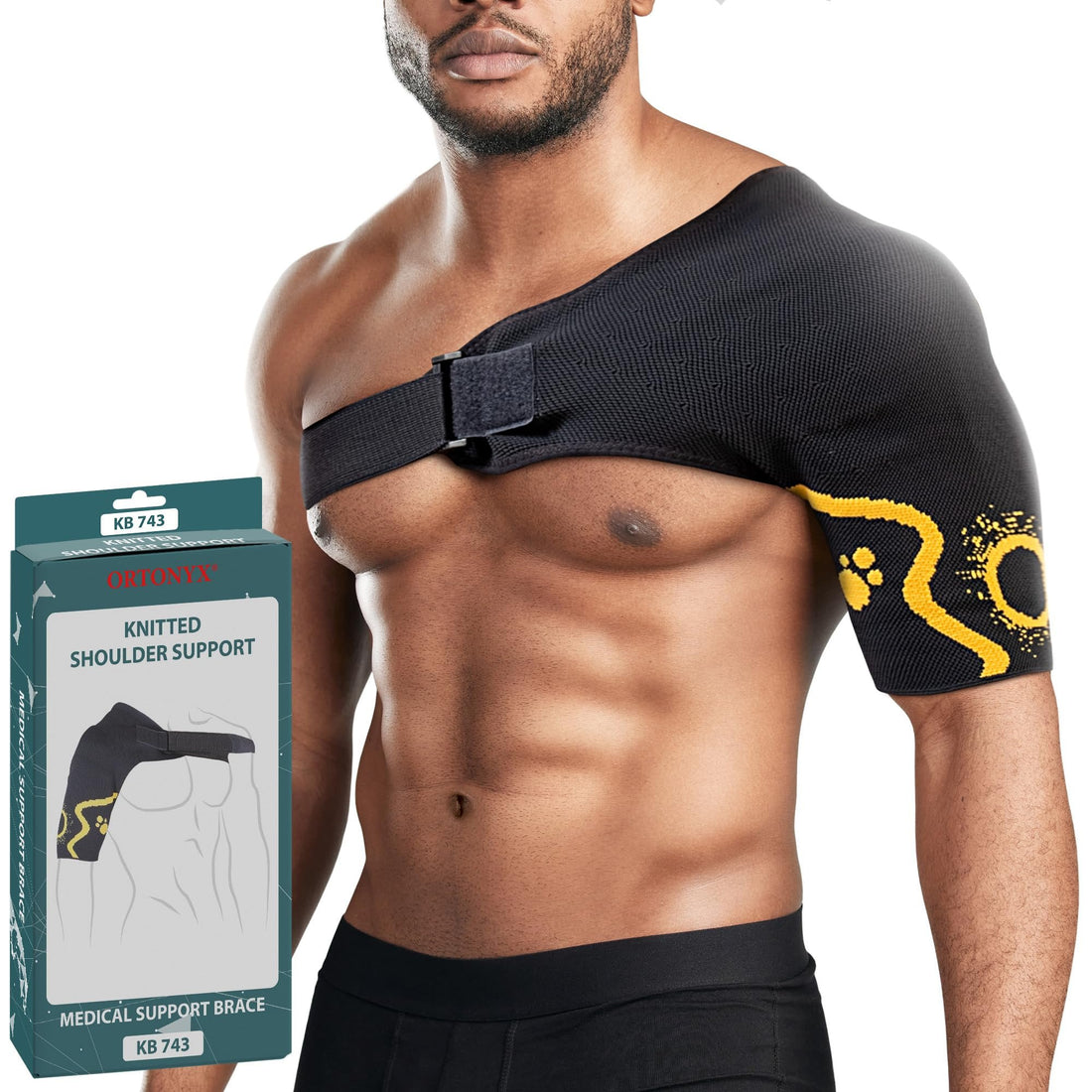
ORTONYX Shoulder Stability Brace for Rotator Cuff - front view with arm strap
Sold Out

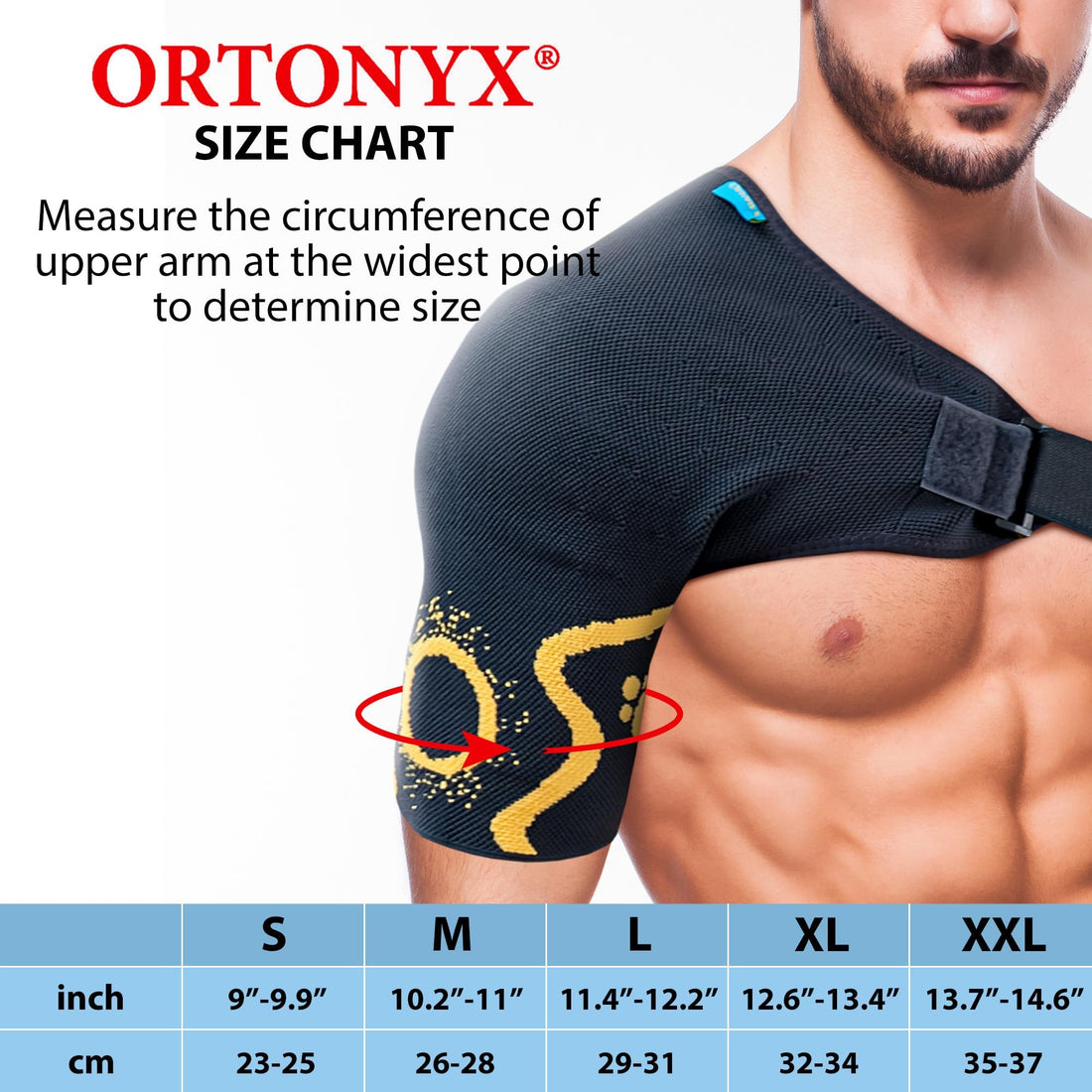
Shoulder Stability Brace Compression Sleeve for Rotator Cuff Support

(4)
Regular price $32.55
Sale price $32.55 Regular price $49.99
Unit price
/
Black/Yellow
Key Features Targeted compression for shoulder stability: 3D knitted sleeve delivers uniform, comfortable compression that...
Tags: back pain, evidence, exercise, kyphosis, posture, posture corrector
Previous
Arthritis Back Pain: How Support Braces Provide Relief
Next
Arthritis Back Pain: How Support Braces Provide Relief

Related Articles

Older adult wearing ORTONYX back support brace for arthritis pain relief at home
arthritis

Arthritis Back Pain: How Support Braces Provide Relief

Arthritis in the spine is one of those conditions that makes everything harder. Getting out...
Person wearing ORTONYX lumbar back brace for herniated disc support at home
back brace

Herniated Disc Support: Choosing the Right Back Brace

A herniated disc can stop you in your tracks. One moment you're bending down to...
New mother wearing ORTONYX postpartum abdominal binder during C-section recovery
abdominal binder

Post-C-Section Recovery: Your Guide to Abdominal Support

A cesarean section is major abdominal surgery β€” even though it's one of the most...

Tags

  • 4th and 5th finger splint
  • 5th finger splint
  • abdominal binder
  • abdominal hernia
  • abdominal hernia belt female
  • abdominal hernia support belt
  • abdominal support
  • ACL recovery
  • ACL surgery
  • ankle brace
  • ankle sprain
  • ankle support
  • arthritis
  • arthritis pain relief
  • arthritis support
  • athletic hernia support
  • back brace
  • back pain
  • back pain relief
  • back support
  • bariatric
  • bariatric surgery
  • belly binder
  • belly button hernia
  • boxer fracture
  • boxers fracture splint
  • brace care
  • brace maintenance
  • bruised ribs
  • buyer's guide
  • buying guide
  • c-section
  • C-section recovery
  • carpal tunnel
  • cesarean
  • chest support
  • children's support
  • clavicle brace
  • clavicle support
  • cleaning medical supports
  • compression benefits
  • compression garments
  • compression sleeves
  • compression therapy
  • costochondritis
  • daily living
  • diabetic foot care
  • diabetic socks
  • diastasis recti
  • disc herniation
  • DME coverage
  • elbow support
  • epigastric hernia
  • ergonomic braces
  • evidence
  • exercise
  • extended size
  • FAQ
  • finger splint
  • foot support
  • foot support diabetes
  • fracture recovery
  • fractured ribs
  • gastric sleeve
  • golfer's elbow
  • groin hernia
  • guide
  • hand injury
  • heart surgery recovery
  • heel pain
  • hernia
  • hernia belt
  • hernia belt comparison
  • hernia belt for men
  • hernia belt for women
  • hernia daily tips
  • hernia diagnosis
  • hernia management
  • hernia prevention
  • hernia prevention athletes
  • hernia recovery timeline
  • hernia risk factors
  • hernia support
  • hernia support belt
  • hernia surgery
  • hernia surgery recovery
  • hernia symptoms
  • hernia treatment
  • hernia truss
  • hernia truss for men
  • hernia types
  • herniated disc
  • improve posture
  • incisional hernia
  • inguinal hernia
  • inguinal hernia belt
  • inguinal hernia truss
  • insurance coverage
  • intercostal strain
  • joint braces
  • joint pain
  • kids orthopedic
  • knee brace
  • knee pain
  • knee support
  • kyphosis
  • living with hernia
  • lordosis
  • lower back pain
  • lumbar support
  • lymphatic support
  • lymphedema
  • materials
  • maternity belt
  • maternity support belt
  • medical braces insurance
  • medical support travel
  • mens health
  • mens hernia support
  • navel hernia
  • nerve pain
  • office support
  • open heart surgery
  • osteoarthritis
  • ostomy
  • parastomal hernia
  • pediatric braces
  • pelvic pain pregnancy
  • pinky finger splint for fracture
  • pinky splint
  • plantar fasciitis
  • plus size
  • post operative recovery
  • post surgery support
  • post-hernia surgery
  • post-surgery
  • post-surgery support
  • post-surgical support
  • postpartum
  • postpartum belly band
  • postpartum support
  • posture
  • posture brace
  • posture correction
  • posture corrector
  • posture support
  • pregnancy
  • pregnancy back support
  • pregnancy support
  • prenatal back support
  • prenatal care
  • product review
  • recovery
  • recovery timeline
  • rib and chest support brace
  • rib brace
  • rib cage support
  • rib injury
  • rotator cuff
  • sciatica
  • sciatica pregnancy
  • scoliosis brace
  • scoliosis management
  • seasonal brace care
  • shoulder back brace
  • shoulder brace
  • shoulder support
  • sizing guide
  • slipped disc
  • spinal arthritis
  • spinal curve
  • spine
  • spine support
  • sports hernia
  • sternum brace
  • sternum healing
  • sternum support brace
  • summer winter support
  • surgical recovery
  • tennis elbow
  • travel with braces
  • TSA medical devices
  • types of hernias
  • umbilical hernia
  • umbilical hernia belt
  • umbilical hernia binder
  • upper back pain
  • weather and braces
  • weight loss surgery
  • women
  • workplace ergonomics
  • wrist brace
  • wrist support

Instagram

Let’s get in touch

Sign up for our newsletter and receive 10% off your first order

Quick link

  • Product Collections
  • Shop by Body Part
  • Best Selles
  • Blog

Company

  • About us
  • Contact us
  • Store Policy
  • Company News
  • Health & Support Guides

Follow ORTONYX

Stay connected with ORTONYX for orthopedic support tips, recovery advice, and exclusive updates on our latest products.

Β© ORTONYX 2016
Payment options:
  • Amazon
  • American Express
  • Apple Pay
  • Diners Club
  • Discover
  • Google Pay
  • Mastercard
  • PayPal
  • Shop Pay
  • Venmo
  • Visa
Cart 0

Shopping Cart

Your cart is currently empty.
Add note for seller
Add a discount code
Subtotal $0.00
  •  
  •  
  •  
One or more of the items in your cart is a recurring or deferred purchase. By continuing, I agree to the cancellation policy and authorize you to charge my payment method at the prices, frequency and dates listed on this page until my order is fulfilled or I cancel, if permitted.
View Cart